
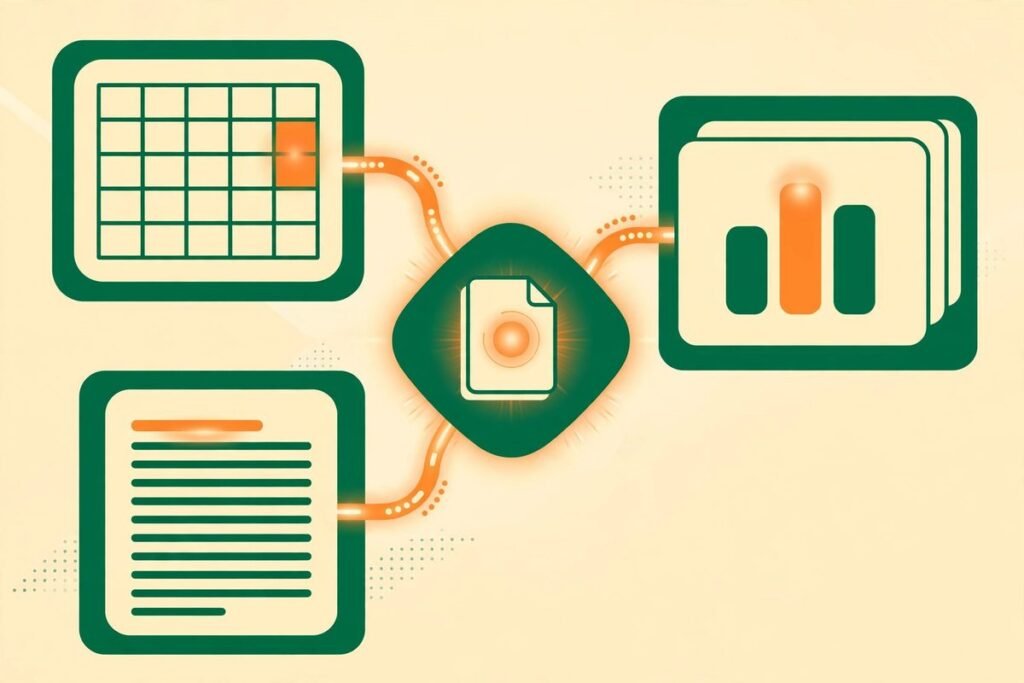
The DeepCell AI tool is a deadline survival kit for office work: one file that holds your data model, your written narrative and your presentation slides, all linked together, so changing a single number updates every place that number appears. Our verdict up front: if your team regularly turns a spreadsheet into a memo and then into a deck under time pressure, DeepCell solves a real, painful problem. If you only ever work in one format at a time, it is probably more machinery than you need. It launched on Product Hunt in October 2026, took the number one Product of the Day spot, and finished fourth for the week — early attention, not yet a proven enterprise standard, so this review separates what is verified from what is still unproven.
DeepCell is built for the work between analysis and decision: financial models, sales reviews, budget forecasts and monthly reports. Those are the jobs where a small change — a supplier slipping a month, a forecast assumption moving — triggers hours of hunting through files to update every copy by hand.
What the DeepCell AI tool actually does
DeepCell comes in two forms: a web app and an agent plug-in for the AI agent you already use. You start with a task or a file, and DeepCell produces ready-to-use documents, spreadsheets and slides that stay connected. Every number carries its sources, plus a cheat sheet for explaining it when challenged. In a review meeting, the hardest question is rarely what the number is — it is where it came from.
In practice: you build or import a model, write the narrative around it, and build the deck that presents it. In DeepCell, those three artefacts are not separate files that happen to agree today; they are views of one underlying file. Edit an assumption once, and DeepCell recalculates the model, updates the narrative, refreshes the deck and flags anything needing human review. Export to Excel, Word or PowerPoint at any time.
- Docs, spreadsheets and slides from one source. No more copying a figure from a model into a memo and then into a deck, three times, by hand.
- Traceable reasoning. Click a number on a slide and trace it back to its source cell and the logic behind it, instead of trusting a pasted value.
- Automated propagation. One edit flows through the model, the narrative and the deck, with items needing human review flagged rather than silently overwritten.
- Sources and cheat sheets. Each conclusion stays attached to its evidence, plus a short explainer you can use when challenged in a meeting.
- Object-level versioning. Track how an analysis evolved without accumulating folders full of files named with FINAL, v2 and really-final suffixes.
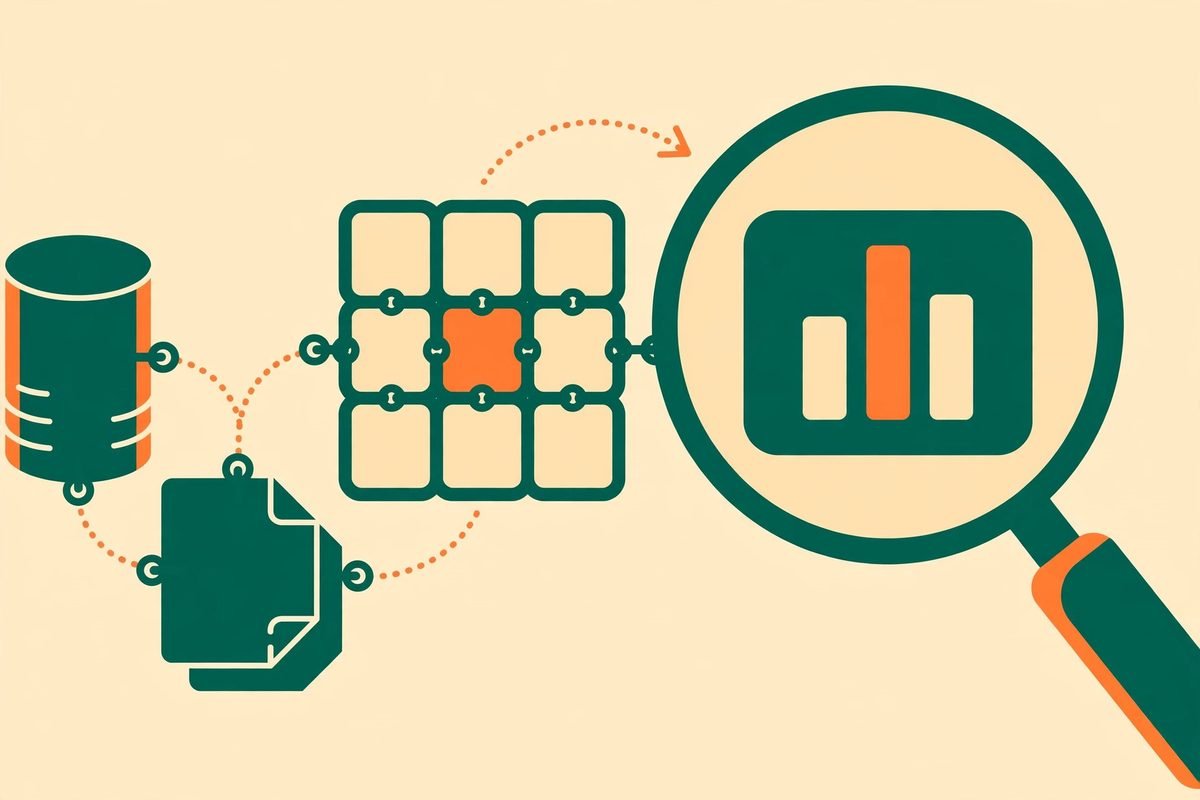
The .deepcell idea: logic first, pages second
The interesting part of DeepCell is not the interface, it is the file format underneath. The team argues that traditional office files were built for human eyes: a spreadsheet, a document and a slide are each a two-dimensional page, and the links that really matter between them often live only in somebody head. When you hand those files to an AI, the AI has to read the screen, guess the connections and hope it guessed right. DeepCell answer is a new format, .deepcell, plus a protocol that records the logic first, underneath the numbers and words, so an AI can follow the reasoning instead of guessing at it.
Under the hood, .deepcell is described as a plain-text, open standard: human-readable and friendly to version control, rather than a locked binary blob. That matters for business users: an opaque vendor format leaves you hostage to that vendor, while a plain-text format can be inspected, diffed and archived with the tools developers already use for code.
Be clear-eyed about what this does not prove. A clever format does not mean good judgement. DeepCell can keep your numbers consistent; it cannot tell you whether your forecast assumptions are sensible or your recommendation follows from your evidence. Those remain human responsibilities.
Pricing: free at launch, paid tiers unpublished
As of late October 2026, Product Hunt lists DeepCell at 0 USD, and we found no published paid pricing tiers on its Product Hunt page. That is consistent with a launch-phase product trying to build a user base, and it is good news for anyone who wants to try it without a procurement fight. It is not a promise that it stays free. Small teams with venture-scale ambitions almost always introduce paid plans, usage limits or team features later, and a tool that becomes central to your monthly reporting cycle is exactly the kind of tool where a future price rise hurts.
Practical advice: trial it on a real but non-critical report first, export the Office versions as backup, and confirm current pricing before building a reporting calendar around it. Do not budget zero forever, and ask for contractual guarantees — data processing, retention, support — before the tool holds anything sensitive.
Who the DeepCell AI tool is for
DeepCell is built specifically for teams whose work turns raw numbers into critical decisions. The maker pitch names three groups, and they are the right ones: finance and investing teams producing valuation models and investment committee memos and decks; FP&A and corporate operations teams running budgets and rolling forecasts; and strategy and consulting teams whose client analyses are subject to constant revision. Add a fourth from our side: agency and advisory teams that produce client-facing reports where a single wrong number can cost credibility.
The common thread is revision under pressure. If a document is written once and never touched again, linked files buy you little. If it is revised five times before a board meeting, the value compounds with every revision — and a monthly pack rebuilt from scratch each month is a strong candidate, because the linked structure can be reused and only the inputs change. It is a weaker fit for solo prose writers, for numbers that live in one unread spreadsheet, and for organisations with strict data-location rules until DeepCell publishes clearer enterprise terms.
Watch-outs and honest limitations
First, DeepCell is very new. It launched on Product Hunt on 20 October 2026 from a small Singapore-based team, and Product Hunt success signals interest, not maturity. Expect rough edges and a fast-changing roadmap: keep exported Office copies as the system of record until it has survived a few of your own reporting cycles. Second, propagation is only as good as the model underneath. If a formula is wrong, DeepCell will faithfully spread the wrong answer to memo and deck. Flagging helps, but it is no substitute for a reviewer checking changed figures against source data before anything goes to a client or board.
Third, adoption is a workflow change, not just a tool swap. Colleagues and auditors are used to Office formats. DeepCell exports to them, but an export is a snapshot: later edits will not update it. Teams need a clear rule about which file is authoritative, or they end up with two versions of the truth — precisely the problem DeepCell exists to solve. Fourth, data sensitivity deserves a pause: financial models and investment memos are highly sensitive, the launch page does not fully answer storage and retention questions, and regulated work should start with anonymised or historical data.
How DeepCell compares to the alternatives
Against plain Excel, Word and PowerPoint, DeepCell wins on consistency and loses on familiarity and ubiquity. Everybody already has Office, everybody knows how to open it, and no training is required. DeepCell asks you to learn a new format and a new mental model in exchange for never again hunting a changed number through three files. For high-revision work, that trade is worth it. For occasional documents, it is not.
Against collaborative suites such as Google Docs and Notion, DeepCell is narrower and deeper: excellent shared writing, but no native treatment of a cell, a paragraph and a slide as one linked object. If your pain is collaboration, pick the suite; if it is number consistency, DeepCell addresses the specific wound. Against AI layers bolted onto office files, DeepCell makes the opposite bet: instead of teaching an AI to guess links between separate files, it stores them explicitly. That is a stronger foundation, but it requires working inside its format from the start.
For a broader view of new AI launches and how we judge them before recommending them to clients, see our AI Tools Directory, where we track tools that have earned a closer look. And if the underlying problem is a reporting workflow that needs rebuilding rather than a single tool, our AI integration and automation services cover exactly that kind of process work.
From our experience: where this kind of tool earns its keep
Over 9+ years and 300+ projects, the reporting failures we have seen were rarely caused by bad analysis. They were caused by version drift: the model said one thing, the memo quoted an older version, and the deck showed a third. The cost was hours of reconciling and a quiet loss of trust. A tool that makes drift structurally harder is worth serious attention, even from a young vendor.
That said, we have also watched teams adopt a clever tool and keep old habits: exporting to PowerPoint, editing the export by hand, never updating the source. If you trial DeepCell, set one rule from day one: the .deepcell file is the source of truth until the final export, and nobody edits an export. One model owner, one reviewer for changed figures, and a short pre-send checklist turn a good tool into a reliable system.
Start small: run one recurring report in DeepCell alongside your existing process for one cycle. Compare time spent, count inconsistencies caught, and check whether the cheat sheets helped anyone defend a number in a meeting. If all three answers are yes, expand.
Frequently asked questions
What is DeepCell?
DeepCell is an AI tool, available as a web app and an agent plug-in, that holds data models, narrative writing and presentation slides in a single linked .deepcell file. It creates ready-to-use docs, spreadsheets and slides with sources and cheat sheets, and updates related parts when you edit.
How much does DeepCell cost?
Product Hunt lists DeepCell at 0 USD as of late October 2026, and no paid tiers were published on its launch page. Treat that as a launch position, not a permanent price: check the official site for current pricing before committing a reporting workflow to it.
Does DeepCell replace Excel, Word and PowerPoint?
No, it sits alongside them. You work in DeepCell while a document is being revised, and export to Excel, Word or PowerPoint whenever you need those formats. The trade-off is that an export is a snapshot: later edits in DeepCell will not update an exported file.
Who should try DeepCell first?
Finance, FP&A, strategy and consulting teams whose reports go through repeated revisions under deadline pressure will feel the benefit fastest. Teams that rarely revise documents across formats, or that handle highly sensitive data under strict controls, should trial it with non-critical data first.
Is DeepCell safe for sensitive financial data?
That cannot be confirmed from the launch page alone. Before uploading sensitive models, review DeepCell storage, retention and data processing terms, and trial with anonymised or historical data. For client-confidential or regulated work, get written terms before adoption.
The DeepCell AI tool earns its Product Hunt attention for a reason: it names the right problem. Keeping numbers consistent across a model, a memo and a deck is tedious, error-prone work, and a format that records the logic underneath beats another AI layer guessing at links. It is young and its pricing is unproven — so trial it on one real report, keep Office exports as backup, and judge it on time saved and errors caught. If you want help rebuilding a reporting workflow around tools like this, talk to MTD Technologies.