
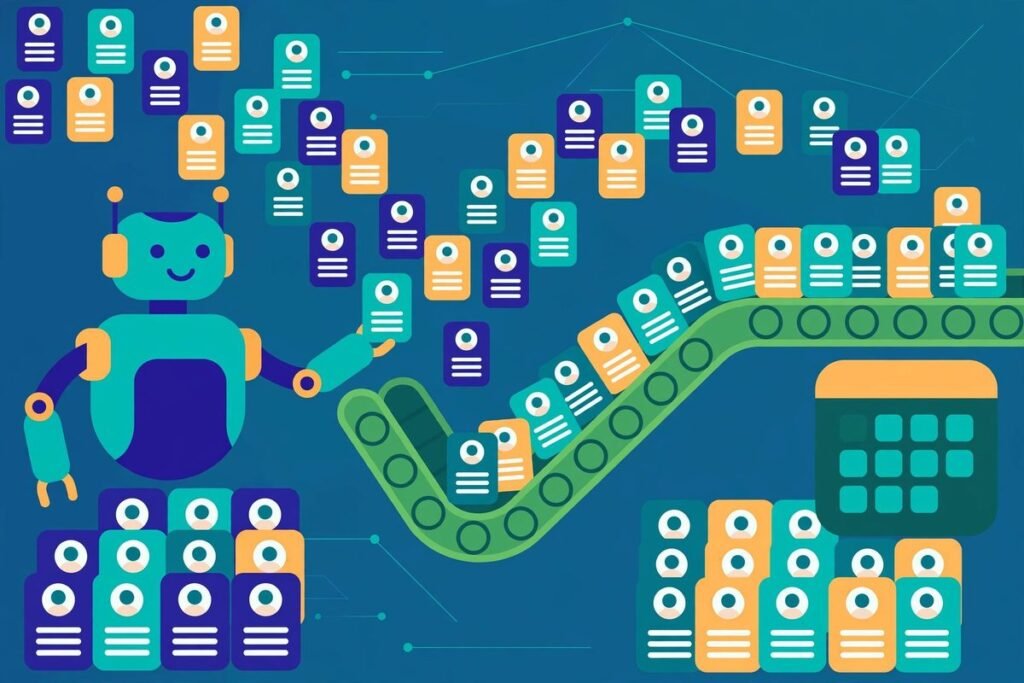
AI agents for lead generation are having their loudest year yet. Every second post in your feed promises an autonomous sales team that finds prospects, researches them, writes personalised outreach, handles objections, and fills your calendar while you sleep. As a team that designs and runs AI automation for businesses — and operates its own autonomous outreach engine every single day — we can give you the boring truth: the agents work, but only inside a system with clear boundaries. This guide is the honest version: what these tools actually do, what they really cost, the three jobs where they reliably pay back, and the exact points where a human must take over.
It is written for business owners and sales leaders who are evaluating a purchase — or deciding whether to build something in-house. By the end you will know how to run a proper pilot, which metric actually matters, and the four failure modes we see most often in the wild.
What “AI agent for lead generation” actually means
The label covers a wide spread of tools, so let’s define it properly. An AI sales development representative — an AI SDR — is software that handles sales-development tasks with a degree of autonomy: it finds leads, researches them, writes and sends personalised outreach, runs follow-up sequences, handles replies, qualifies prospects, and books meetings. The better ones adjust their behaviour based on what happens — changing which accounts they prioritise, how they phrase the next touch, and when they hand off to a person.
In practice the market splits into two camps. Inbound AI SDRs live on your website: they qualify visitors with your ICP questions, answer product questions from a knowledge base, and book meetings with a rep — replacing forms-first funnels. Outbound AI SDRs work the other side: they research prospects, write cold email and LinkedIn outreach, run follow-up sequences, and route warm replies to a human. A good comparison of AI SDR tools breaks these camps down clearly, and it is worth reading before you buy anything. The right choice depends entirely on which side of your funnel is leaking — and most businesses we talk to cannot answer that question before they start shopping.
A useful test before you spend: if a tool just sends scheduled emails, it is automation, not an agent. The agent part is decision-making at each step — which lead next, what to say, when to stop, when to escalate. That distinction matters because it determines exactly where things can go wrong.
What AI agents for lead generation do well
Strip away the demos and there are three jobs where these agents reliably earn their keep. Everything else is still experimental.
1. Speed-to-lead
The agent’s unfair advantage is instant response. An inbound voice agent answers the call at 11pm, qualifies the caller, and books the estimate; a missed-call text-back workflow fires within a minute. Teams that track this discipline closely treat a sub-two-minute response as the benchmark, and report booking rates of 5–15% from new leads when the follow-up machine is properly dialled in. Humans cannot be everywhere. Software can.
2. Relentless follow-up
Most deals die between touch three and touch seven — exactly where human reps get tired or distracted. Agents do not. They run the whole sequence — value-add touches, bump emails, break-up notes — with the same energy on touch ten as on touch one. This is unglamorous and it compounds: the pipeline you are already generating converts better without you hiring anyone.
3. Research and drafting volume
An agent can research a hundred accounts and draft personalised first lines before your rep has finished their morning coffee. A HubSpot survey found that 64% of sales professionals save one to five hours a week from AI-driven task automation — and that figure covers general AI use, not even dedicated agents. The leverage is real, provided a human reviews everything before it leaves the building.
Perspective helps here. Gartner projects that 40% of enterprise applications will integrate task-specific AI agents by the end of 2026, up from under 5% in early 2025 — the direction of travel is not in doubt. But McKinsey’s counterpoint should be taped to every buyer’s monitor: more than 80% of companies surveyed see no measurable EBIT impact from their AI investments. The difference between those two statistics is implementation. Agents work when they sit inside a defined workflow with clear ownership; they evaporate into a line item when they are bought as a magic box. (Both figures via the lead generation industry outlook for 2026–2027.)
The tools and what they actually cost
The stack has four layers, and most vendors sell you one layer while implying they own all four. Knowing the layers keeps the sales calls honest. Prices below are from vendor pricing pages checked in October 2026 — several compiled in this roundup of the 14 best AI lead generation tools for 2026 — and we also track many of these in our AI Tools Directory.
- List building: Apollo (free plan, then from $49 per user/month) gives you a searchable B2B database with AI search and sequences in one seat.
- Enrichment: Clay (from $185/month) runs AI research agents across 150+ data providers in a waterfall; Cleanlist AI (from $49 per seat/month) verifies emails and phone numbers the same way. This layer is where data quality is won or lost.
- Outreach execution: Instantly ($37–47/month) and Smartlead (from $39/month) focus on deliverability — warm-up, inbox rotation, reply detection — plus Lemlist for multichannel sequences.
- Autonomous SDRs: Artisan’s Ava (~$9,250/year for an end-to-end “set and forget” SDR workflow), 11x.ai (enterprise, roughly $5,000/month for multi-channel digital employees), AiSDR (~$750/month with published pricing). One detailed review of AI sales agents puts these side by side with honest starting prices.
- Voice agents: Vapi (~$0.05/minute hosting plus model costs), Retell AI ($0.07/minute), Bland AI ($0.09 per connected minute) — see the voice agent comparison for lead generation for the full table.
- Human-assisted: Regie.ai ($180/user/month) keeps a rep approving every send — the middle path most serious teams actually end up on.
Three cost realities that never appear in the demos. First, the platform fee is often the smallest line: data, verification, extra domains, phone numbers, and human oversight add up fast. Second, autonomous pricing is almost always quoted before you have paid for the CRM plumbing and the oversight hours. Third, “from” pricing and enterprise pricing are different universes — anything custom-priced should be treated as expensive until proven otherwise in your business case.
From our experience: where it breaks
We build AI workflow automation for clients, and we run autonomous outreach on our own site — multiple collection cycles a day, draft-to-send inside minutes, fully autonomous once the templates are approved. It works. It also breaks in four predictable ways, and every one of them is a process failure, not a model failure.
1. Bad data in, burned domain out
An agent is only as good as the list. Waterfall enrichment, real-time verification, bounce discipline — none of this is optional. The AI does not make bad contact data good; it just spends it faster. We verify before anything sends and quarantine anything uncertain. Your sender reputation is an asset; treat outreach volume like spending from it.
2. Generic outreach
The single biggest risk reviewers flag is weak persona control producing messages that read automated — which torpedoes both deliverability and brand. Every new campaign starts small with us: a few dozen sends, read every reply, tune the voice, then scale. The businesses that fail here crank volume first and wonder why reply rates crater in week three.
3. Set-and-forget drift
Left alone, an agent slowly rephrases your positioning, overpromises during qualification, and answers questions with increasing confidence and decreasing accuracy. We review transcripts weekly — it is a non-negotiable part of the routine. Automations that drift off-brand are the first pitfall every serious operator names, and they are completely avoidable with a review cadence.
4. It will not fix your market
The clearest line in any honest buyer’s guide: the AI does not change which market you should sell to. If your ICP is wrong, an agent just helps you fail at scale — politely, and twenty-four hours a day.
Where the human handoff is mandatory
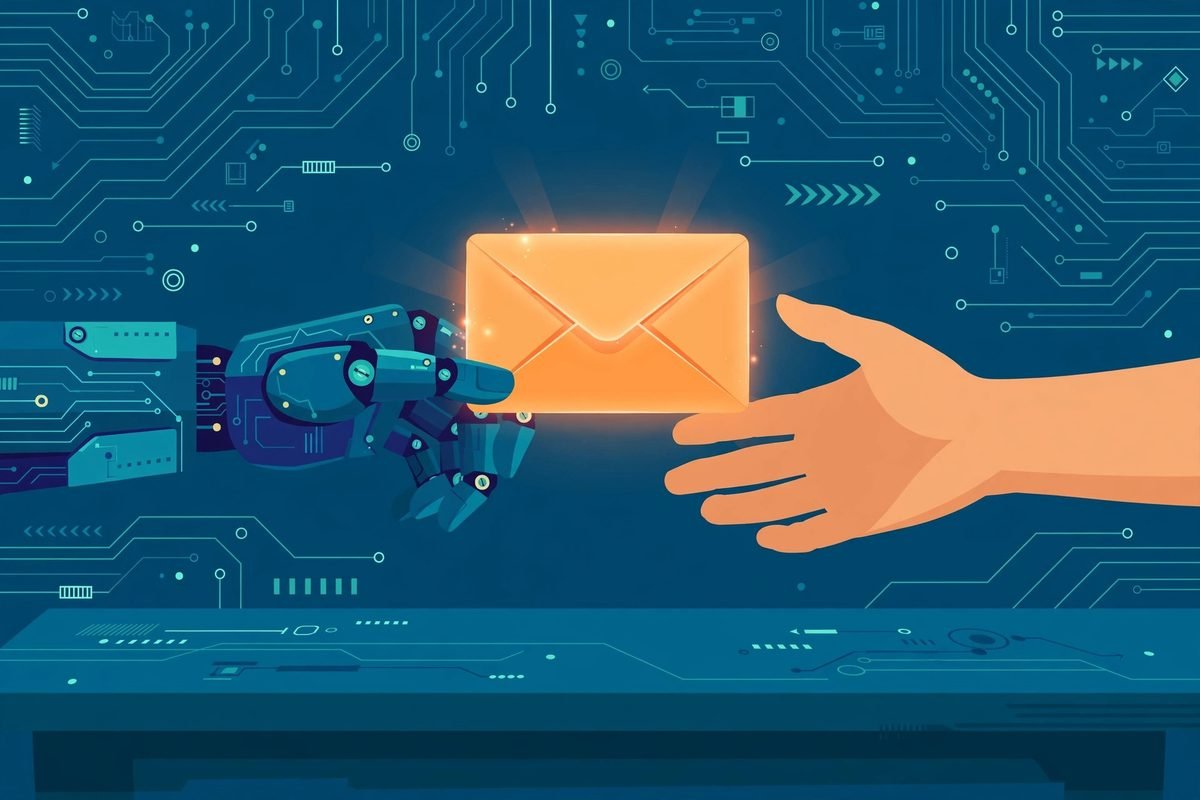
This is the section the vendors skip, and it is the one that determines whether your pilot succeeds. An AI SDR earns the meeting; a human earns the deal. Design the handoff deliberately — do not discover it after a prospect complains.
- The first real objection. Agents handle “not interested” and “send me more info” fine. Budget pushback, timeline negotiation, and “how are you different from X” need a person who can read the room.
- Complex, multi-stakeholder B2B. For complex B2B sales, human SDRs still outperform on nuanced, multi-threaded conversations — which is why hybrid AI-plus-human models post the strongest cost-per-opportunity results, as this guide to AI SDR tools for B2B lead generation lays out clearly. If your deal involves committees, the agent’s job ends at the first qualified meeting.
- Compliance-sensitive contexts. Regulated industries, financial advice, anything health-related: keep the agent in the waiting room, not the consultation.
- High-ticket deals. Nobody signs a six-figure contract because a bot was persuasive. Warmth transfers poorly; a human voice on the discovery call is part of the product.
- Reputation-risky moments. Escalations, complaints, confused prospects: detect frustration fast and route to a human immediately. One bad automated exchange costs more than a hundred good ones.
Our rule of thumb: the agent qualifies and books; the human takes it from the first substantive question. Anything later than that is theatre, and prospects can tell.
How to run a pilot that tells you the truth
The honest evaluations we have seen all share a structure. One reviewer tested five platforms side by side over six weeks against the same ICP and offer — that is the standard. Anything less is vibes. Borrow this checklist:
- Same ICP, same offer, same window. If you are comparing tools — or comparing the agent against your current motion — hold everything else constant.
- Measure cost per qualified meeting. Not opens, not clicks, not “messages sent.” Fully-loaded cost (platform fee + data + domains and numbers + oversight hours) divided by qualified meetings booked. Then compare that number with your current cost per qualified meeting. The right formula weighs the full cost against pipeline value: meetings × conversion rate × deal size × close rate.
- Test on a small list first. Deliverability damage is hard to reverse. Warm the infrastructure, start small, read every reply.
- Read the transcripts. Before you scale anything, read fifty conversations end to end. You will learn more from one hour of transcripts than from a month of dashboards.
- Set a kill criterion in advance. “If cost per qualified meeting is not under £X by week six, we stop.” Pilots without a kill criterion become subscriptions.
Frequently asked questions
Can AI agents replace human SDRs entirely?
For simple, high-volume, single-threaded sales: largely yes, with oversight. For complex B2B with multiple stakeholders, not reliably — humans still win the nuanced conversations, and hybrid AI-plus-human models produce the best cost-per-opportunity. Buy the agent for volume and consistency; keep humans for judgement.
How much does it cost to run AI agents for lead generation?
A DIY stack (enrichment + outreach + domains) runs a few hundred dollars a month plus your time. Managed autonomous SDRs range from a few hundred to several thousand dollars a month, with enterprise platforms priced custom. Budget the plumbing and the oversight, not just the platform fee — those typically add 30–50% to the real cost.
What meeting rates are realistic?
Anyone quoting you a universal number is selling something. Rates vary enormously by list quality, offer strength, and channel. The honest benchmark is your own: run the pilot, compute cost per qualified meeting, and compare it against your existing channels. If a vendor will not help you measure that, walk away.
Do these work for small businesses?
Yes — but sequence it. Start with inbound qualification and automated follow-up (cheapest, lowest risk, fastest payback), then add outbound prospecting once your messaging is proven. Small teams actually benefit most, because the agent covers nights, weekends, and the follow-ups nobody has time for.
Is AI-powered cold outreach legal?
It depends on the channel and the jurisdiction. Cold email rules on consent, identification, and opt-out handling vary by country; AI voice calling faces stricter regulation in many markets, including disclosure requirements. Build suppression and opt-out handling into the workflow from day one, and get proper legal advice before scaling voice or SMS. This is not legal advice — it is a reminder not to skip it.
The short version: AI agents for lead generation are genuinely useful infrastructure in 2026 — for speed-to-lead, for follow-up discipline, and for research volume. They are a poor replacement for sales judgement, a dangerous thing to run unsupervised, and an expensive way to discover your ICP was wrong. The businesses getting real pipeline from them all do the same unglamorous things: clean data, tight ICP, small tests, transcript reviews, and a deliberate handoff to a human at exactly the right moment. Do those five things and the agent earns its seat. Skip them and you will join the 80% with nothing to show on the P&L.
If you would like an honest assessment of whether an AI lead-generation agent fits your sales motion — or help building a pilot that is measured properly — talk to us. We do this work ourselves, from AI integration through full workflow automation, and we will tell you straight if the answer is “not yet.”