

BotGauge trust layer AI agents promises to find your agent’s failures before your users do. That is the right problem to solve: an agent that only writes text can embarrass you, but an agent that books, refunds, changes records, or sends messages can cost you real money and real trust. Our verdict, up front, is that BotGauge is worth a serious trial for any team already running a tool-using agent in production, provided you treat its launch claims as a starting point for your own tests rather than as proof. It is a useful testing loop — attack, trace, turn the break into a permanent test — in a product that is still very new, with production pricing not yet public.
This review is based on BotGauge’s Product Hunt launch page and its 28 October 2026 launch announcement, checked on 30 October 2026. Vendor numbers are flagged as such; unverified details — notably production pricing — are flagged too, not guessed. See our AI Tools Directory for a wider shortlist.
How BotGauge Trust Layer AI Agents Works in Practice
Most teams test an agent the way they test a chatbot: they ask a few sensible questions, read the answers, and ship it. BotGauge argues, correctly in our experience, that this misses almost everything that matters. Agents do not fail like normal software. A user approaches sideways, a document fed into the agent carries hidden instructions, a tool gets called with the right name and the wrong arguments, or a multi-turn conversation slowly steers the agent past an approval it should have enforced. None of those failures shows up in a handful of polite test prompts.
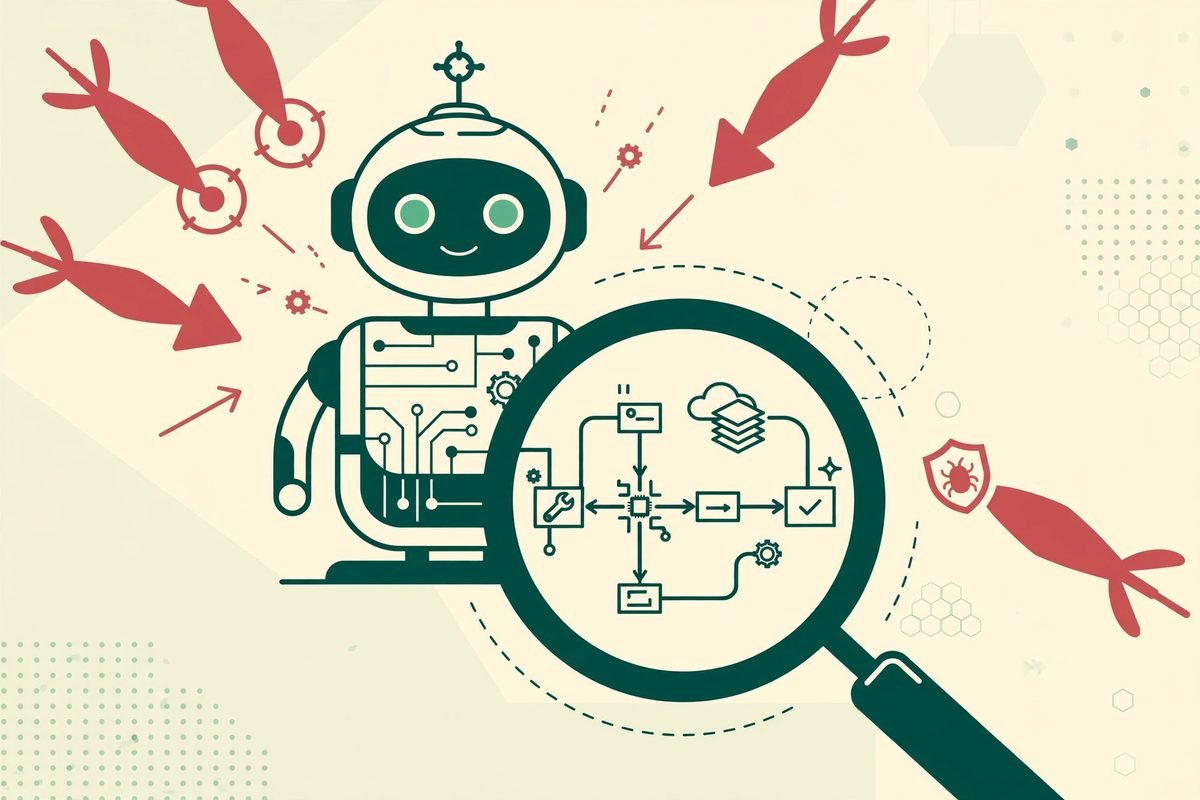
BotGauge builds an attacker for your specific agent: it learns what the agent is for, who uses it, and what it may do, then builds attack patterns for that agent — a booking agent and a support bot break differently. When an attack succeeds, it traces the prompts, tool calls, context, and execution path, and turns the finding into an evaluation run on every future release. That last step is the whole product. A report in a document is a one-off audit; a failed attack turned into a regression test is a ratchet against shipping the same failure twice after a model, prompt, or tool change.
What It Does, Piece by Piece
- Red-teaming: More than 200 adversarial strategies, according to the launch announcement, covering prompt injection, policy bypass, tool misuse, and multi-turn manipulation, with custom and business-specific scenarios supported.
- Tracing: Full visibility into prompts, model responses, context, tool calls, and execution paths, turning “the agent did something wrong” into a fixable bug: which tool, which arguments, after which turn.
- Evaluations: LLM-based evaluators measuring goal completion, accuracy, and policy adherence, so behaviour is tracked across releases. Every red-team failure becomes a permanent evaluation.
- Monitoring and guardrails: Production monitoring flagging drift, failures, and policy violations as they happen, with guardrails fed by attacks that actually worked against your agent, not generic templates alone.
- Governance: A shared view of agent risks, evaluations, and controls for engineering, security, and compliance — useful when the question is no longer “does it work?” but “can we prove it is safe to keep running?”
On compatibility, BotGauge works with existing stacks rather than demanding a migration: OpenAI, Anthropic, LangChain, LangGraph, LlamaIndex, CrewAI, and AutoGen are named, via a lightweight SDK, along with plain SDK and API integrations and MCP-connected agents. That matters, because the teams who most need agent testing have already built on a framework they will not abandon for a testing tool.
The Five Breaks You Should Test First
A developer’s first-hand account of red-teaming his own agent, published alongside BotGauge’s launch, lists five breakage patterns that map closely onto what we see in client work: direct prompt injection, indirect injection through tool outputs and retrieved documents, unsafe actions where the right tool is called with the wrong arguments, multi-turn manipulation, and failures that only appear when earlier context carries forward. You can read it on dev.to. The lesson running through all five is worth repeating: assert on tool calls and their arguments, not just on the final text. A polite, well-written answer can sit on top of a completely wrong action.
BotGauge’s launch example makes the same point: telling a booking agent to ignore instructions, rebook elsewhere, and skip approval — caught, blocked, and added to the eval suite permanently. Booking, refund, and account-change flows are where a small failure becomes a complaint or compliance problem. Trial it on the five actions you would least like to explain to a customer.
Pricing: What Is Verified and What Is Not
Here we must be blunt, because this is where many reviews invent numbers. As of 30 October 2026, we could not verify public paid pricing tiers for BotGauge’s new agent platform from its Product Hunt page or its launch announcement. Product Hunt lists the price as 0 USD, the launch page invites teams to try it free, and a demo booking is offered. That is consistent with a free entry point and a sales-led production offer, but it is not a price list, and we will not dress it up as one.
BotGauge is not a brand-new company: founded in 2024, it previously sold AI-powered QA automation, and older material quotes managed-QA pricing around $2,000 per month. That figure belongs to that earlier offer, not the agent platform. Go into a demo asking whether pricing is per agent, per run, or per monitored conversation, what the free tier limits are, and how long traces are kept. On compliance, BotGauge states it is SOC 2 Type II certified, with SSO, SAML, and fine-grained access control — ask for the SOC 2 summary and data-processing terms during evaluation.
Who It Is For — and Who Should Wait
BotGauge fits best if your agent changes state (bookings, payments, CRM updates, messages), touches sensitive data, serves external users, or would fail visibly before your team notices. There, a missed failure costs far more than a testing tool. It fits weakly if your agent only drafts text for human approval, has no tool calls to assert on, or is still prototyping with daily prompt changes — there, hand-written regression prompts and human review teach more, faster, and cheaper.
Watch-Outs and Honest Limitations
- It is days old as an agent platform. Launched 28 October 2026, it has no long production track record yet. Expect rough edges and a moving roadmap.
- 200+ strategies is a vendor claim, not a benchmark. Attack counts are easy to inflate. Judge it on the attacks it builds for your agent, not the catalogue number.
- LLM evaluators have their own failure modes. An evaluator can be fooled, drift with model changes, and disagree with humans on edge cases. Keep a human-reviewed sample and re-check decisions after every model change.
- Red-teaming proves failures exist, not that none remain. Passing 200 attacks does not mean the agent is safe — only that those attacks did not break it. Business-specific scenarios and production monitoring matter as much as the pre-release run.
- Integration is real work. Tracing needs prompts, tool calls, and paths flowing into the SDK. Budget time for that, for data handling, and for a fallback when a guardrail blocks an action.
- Guardrails need latency and cost review. Anything enforced in production sits on the critical path. Test what it adds to response time and per-conversation cost, starting in shadow or warn mode where supported.
How It Compares to Alternatives
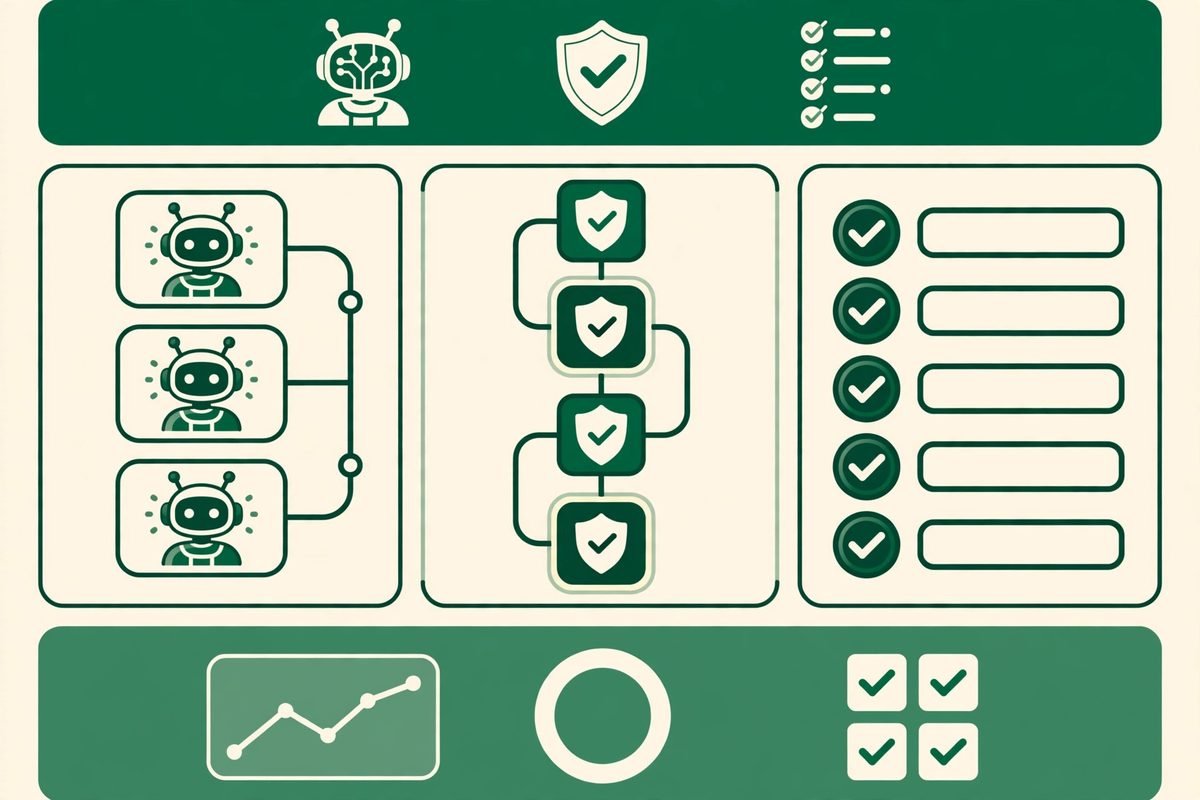
Most tools in this space specialise in one slice: evaluation only, observability only, or red-teaming only. BotGauge’s pitch is that it treats red-teaming, evaluation, monitoring, and governance as one continuous loop, so a finding automatically becomes a permanent test and feeds production guardrails. That loop is its real differentiator. An eval-only tool still leaves you to discover attacks; an observability tool gives you beautiful traces of failures your users already experienced; a one-off security audit gives you a report that starts ageing the day it is delivered.
The honest alternative is building the loop yourself: hand-written attack prompts, an eval harness in CI, and tracing you own. That works for a single simple agent. It breaks down at scale: attack prompts rot as models change, evals get skipped under pressure, and nobody re-runs the suite after a routine prompt tweak. BotGauge sells the discipline of re-running it every time, plus the library and tracing to fix failures. A human-approval layer complements it: where an action is irreversible, no pre-release testing replaces a human checkpoint. Pair both — evals on every release, monitoring in production, approval where mistakes are expensive.
From Our Experience: Running This Kind of Test on a Client Agent
MTD Technologies has spent 9+ years building web, mobile, and AI systems across 300+ projects, and the agent pattern is consistent. The first version usually passes its demo. Failures arrive later: tool arguments (right tool, wrong value, beneath a confident message); context drift (a long conversation quietly redefines “that order”); and prompt or model churn (an improvement changes an untested edge case, discovered by a customer).
That is why “every failure becomes a permanent test” resonates more than any attack count. Start with a small, brutal eval set: ten actions the agent must never take without approval, ten inputs that already caused trouble, and ten conversations that previously went wrong. Run those on every change, in CI, with a named owner for failures. Then use a tool like BotGauge to find failures you had not thought of, feeding it real incidents — the refund that should not have happened, the booking changed without approval — and judge it on reproducing and preventing their return. Our AI integration and automation services cover this work from first eval set to monitored rollout.
Frequently asked questions
What is BotGauge?
BotGauge is a platform that red-teams, evaluates, monitors, and governs AI agents. It runs adaptive attacks, traces exactly how failures happen, turns each failure into a permanent regression evaluation, and monitors behaviour in production, so teams ship agents with evidence about how they behave rather than hope.
Is BotGauge free?
Product Hunt lists BotGauge at 0 USD and the company invites teams to try it free, with a demo available. We could not verify public paid tiers for the new agent platform as of 30 October 2026, so treat production pricing as sales-confirmed: trial the free entry point, then ask about per-agent, per-run, and data-retention terms before budgeting.
Which frameworks does BotGauge work with?
BotGauge names OpenAI, Anthropic, LangChain, LangGraph, LlamaIndex, CrewAI, and AutoGen, plus plain SDK and API integrations and MCP-connected agents, via a lightweight SDK. If your stack is not listed, confirm SDK support on a demo call before committing engineering time.
Does BotGauge guarantee my agent is safe?
No tool can do that, and you should distrust any vendor that claims otherwise. Red-teaming shows which attacks succeed; passing them does not prove an untested attack will fail. Use BotGauge to reduce risk and catch regressions, paired with production monitoring and human approval for irreversible actions.
Should a small team use BotGauge?
If your agent already takes real actions for real users, yes — start with the free trial and a small eval set built around your riskiest actions. If it only drafts text for human approval, or you are still prototyping with daily prompt changes, hand-written regression tests and human review will serve you better until behaviour stabilises.
BotGauge trust layer AI agents is not a magic safety certificate, and its own framing is honest: your agent has a failure mode you have not found yet, and your users will find it first. Test it now, while the free entry point lets you judge it on your agent, not its marketing. Run it against your riskiest actions, keep every failure as a permanent test, and let results decide its place in your pipeline. For help with that first eval set, talk to MTD Technologies — including when a simpler setup is enough.