

Choosing between a landing page vs a full website is one of the first decisions your startup will make about its online presence, and it is one that gets expensive when you get it wrong. Build a full website too early and you burn budget on pages nobody will ever visit. Launch with only a landing page and you can outgrow it within months, stuck with a site that can’t rank on Google, can’t hold the content you need, and can’t be handed to a growing team without a rebuild.
After nearly a decade of building sites for startups and enterprises, we use a simple framework with clients: the decision is not about which is “better”, but about what your business actually needs in the next six months. Here is how we walk founders through it.
What these two options actually are
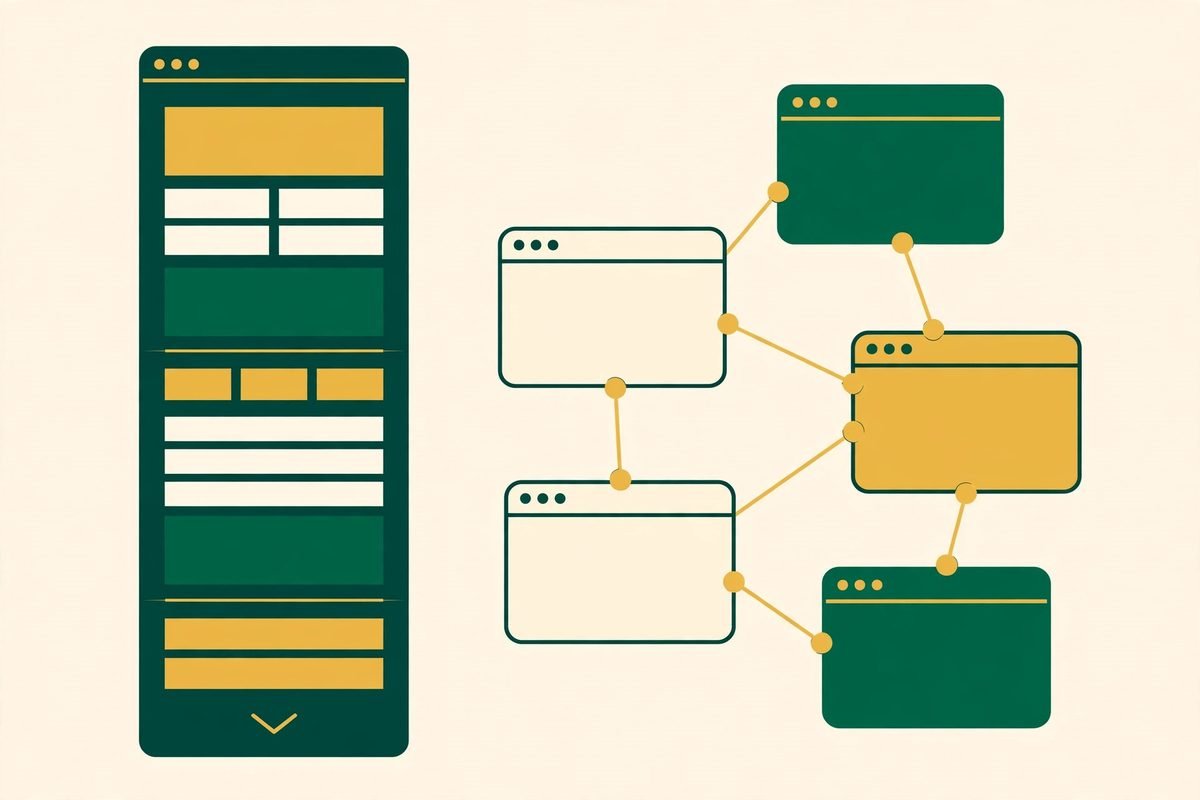
A landing page is a single, focused page built around one goal: get the visitor to do one thing. That thing might be signing up for a waitlist, booking a demo, downloading a lead magnet, or pre-ordering a product. Everything on the page — the headline, the sections, the testimonials, the calls to action — exists to push that single conversion. There is no navigation maze and no blog to maintain.
A full website is a multi-page property: a homepage, service or product pages, an about page, a blog, a contact page, and whatever else the business needs over time. Each page can target its own search keywords, answer its own set of questions, and support its own conversion path. It is an asset that compounds: every new page adds a new way for customers to find you.
The honest cost comparison
Money is usually what starts this conversation, so let’s be blunt about the numbers we see on real projects. A professionally built landing page typically runs from a few hundred to a couple of thousand dollars, and it can be live in one to two weeks. A solid small-business website with real content, proper SEO foundations, and room to grow is a larger project — several weeks of work and several times the budget.
But the sticker price is not the full story. A landing page is cheap if you never have to redo it. The founders who get burned are the ones who launch a landing page, discover six months later that they need a blog, case studies, pricing tiers, and documentation, and then pay to rebuild everything from scratch — on a platform the landing page was never designed to support. The rebuild almost always costs more than doing the website properly the second time, plus you lose months of search visibility you could have been building.
When a single landing page is the right call
There are situations where a landing page is not just adequate but genuinely the better choice:
- You are pre-launch and validating demand. If you are collecting waitlist emails or testing whether a problem is worth solving, one page is all you need. Spending months on a website before you have customers is a classic startup mistake.
- You have one clear offer and one clear action. A consulting service with a single call-to-action, a mobile app with one download button, a product launch with pre-orders — when the funnel is one step, extra pages only create exits.
- Your traffic is paid, not organic. If you are sending ad traffic or newsletter links to the page, you don’t need SEO breadth. A landing page gives every click nowhere to go except your conversion.
- You need to move in days, not months. A campaign launch, an event, a partnership announcement — when timing matters more than depth, ship the page.
When you need the full website
On the other hand, some signals tell us the landing page will hold the business back almost immediately:
- Organic search is part of your plan. A single page can rank for one, maybe two keyword themes. If customers should find you for your services, your location, your niche, and your content, you need multiple pages — each one a door into your business.
- You sell to businesses, not just buyers. B2B deals involve research. Prospects will look for your team, your process, your case studies, and your pricing before they ever contact you. A one-pager looks thin to an enterprise buyer.
- You need content that builds trust. Blogs, resources, documentation, FAQs — this is the content that answers objections before the sales call. It needs a home, and that home is a website.
- Your offer has branches. Multiple services, multiple plans, multiple audiences — once you have more than one story to tell, one page starts fighting itself.
The hybrid path most startups should take
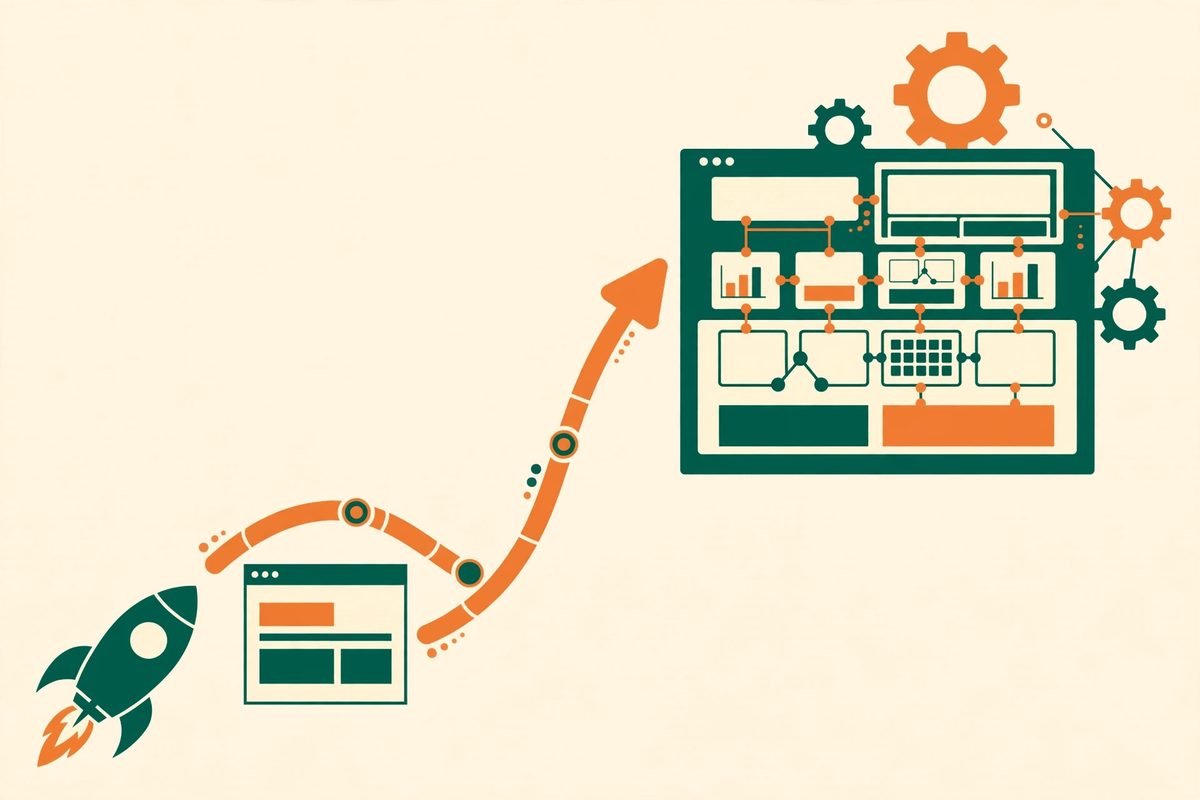
In practice, we rarely recommend either extreme in isolation. The approach that works best for most startups is to start with a landing page built on a foundation that can grow into a website. That means choosing a stack where adding pages, a blog, and a CMS does not require a rebuild — which is exactly why we build on platforms like WordPress or Next.js that scale from one page to one hundred without switching technology.
Here is what that looks like in practice: you launch with a sharp, conversion-focused homepage that functions as your landing page. Behind it, you already have the infrastructure for a blog, service pages, and content sections. When the business is ready — when search traffic matters, when you have case studies to show — you expand rather than rebuild. No migration, no lost rankings, no starting over.
A practical decision framework
If you are still unsure, run through these five questions:
- Where will your first 1,000 visitors come from? If the answer is ads, social, or your network, a landing page works. If the answer is Google, you need a website.
- How many different things do you need visitors to understand? One thing: landing page. Several: website.
- Do you need to look established? Enterprise clients, investors, and partners all do diligence. A full site is part of that first impression.
- Will you publish content regularly? If yes within the next six months, build the website now — the SEO head start is worth it.
- What is the cost of being wrong? An unnecessary website wastes money once. A missing website costs you every week you grow without one.
Frequently asked questions
Can a landing page rank on Google?
It can, but only narrowly. A well-built landing page can rank for one focused keyword theme, especially branded or very specific terms. It cannot compete for the range of searches a business normally needs, because Google has only one page of yours to judge — and one page can only prove relevance to so much.
Can I start with a landing page and add more pages later?
Yes — if the landing page was built on the right foundation. This is the key detail founders miss. A landing page built inside WordPress or a Next.js project can grow into a full site seamlessly. A landing page built in a locked-down landing-page-only tool may force a full rebuild later. Ask your developer how expansion will work before you build.
Is a landing page enough for a B2B startup?
Usually not for long. Early on, when you are selling founder-led and every deal comes from a warm intro, a landing page is fine. The moment you are trying to win cold inbound leads or larger contracts, buyers expect a real website with substance — team, process, proof, and content. Most B2B startups outgrow the single page within their first year.
What costs more in the long run?
Starting with a landing page and rebuilding later is almost always more expensive than building a modest, expandable website from the start. The rebuild means paying for design, development, content migration, and redirect mapping twice — plus the lost months of organic growth. The cheapest option is the one you only have to build once.
The short version: a landing page is a tool for focus, a website is an asset for growth, and most startups eventually need both. The smart move is choosing the foundation that lets you start focused and grow into the full site without rebuilding. If you are weighing the options for your own startup, take a look at how we approach web development — we build sites designed to start lean and scale — or get in touch and we will give you a straight answer on what your stage actually calls for.