
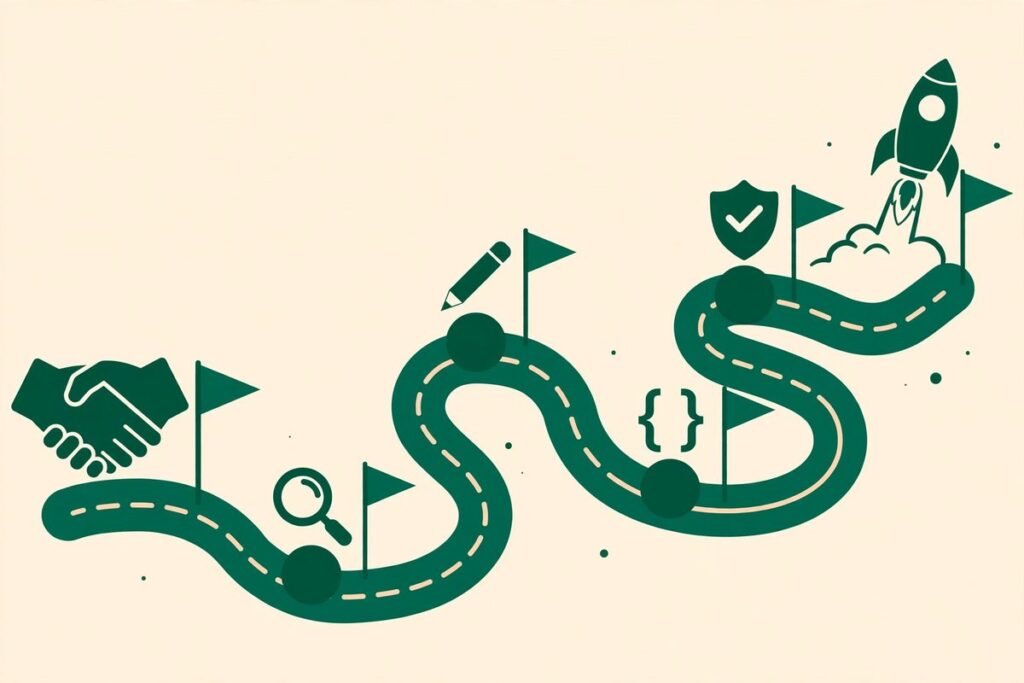
The MTD Technologies development process exists for one reason: so you always know what is happening with your project, what happens next, and what we need from you — before money changes hands, not after. This post walks through every stage, from the first call to launch and ongoing support, written the way we would explain it on that first call. If you have been burned by an agency that went quiet, delivered something different from what was discussed, or surprised you with extra costs, each stage below is designed to prevent exactly that.
MTD Technologies is a full-service development agency based in Multan, Pakistan, run by its founder, Malik Tanveer Dhool, with 9+ years of experience and 300+ projects delivered for 120+ clients worldwide. The process described here is the same whether the project is a website, a CRM, a mobile app or an automation build — the deliverables change, the discipline does not. If you have not yet seen what we build, start with our guide to MTD Technologies services; this post is about how the work itself runs.
Inside the MTD Technologies development process, stage by stage
Stage 1: The discovery call
Everything starts with a short call — usually around 15 to 30 minutes. We ask what you are trying to achieve, what is not working today, who will use the thing we build, and what constraints you have. You can ask us anything in return, including whether we think you need a smaller solution than the one you had in mind. Sometimes the honest answer is that a configuration change or an off-the-shelf tool will do, and we will say so. The call ends with a clear next step: either a written scope from us, or an honest explanation of why we are not the right fit. What we need from you at this stage is simply candour — the projects that go well start with a truthful picture of the problem, the budget range and the deadline pressure, if any.
Stage 2: Scoping and proposal
After discovery, we write the scope: what will be built, feature by feature; what is explicitly not included; the technology approach; and a transparent quote against that scope. This document matters more than any sales conversation, because it becomes the shared reference for the whole project. Read it critically. If something you expected is missing, this is the cheapest moment to add it — changes at scope stage cost a conversation, while the same change mid-build can cost real time. When you approve the scope, we agree the stage plan and the project begins. Nothing is built, and nothing is charged, on the basis of a vague verbal understanding.
Stage 3: Design
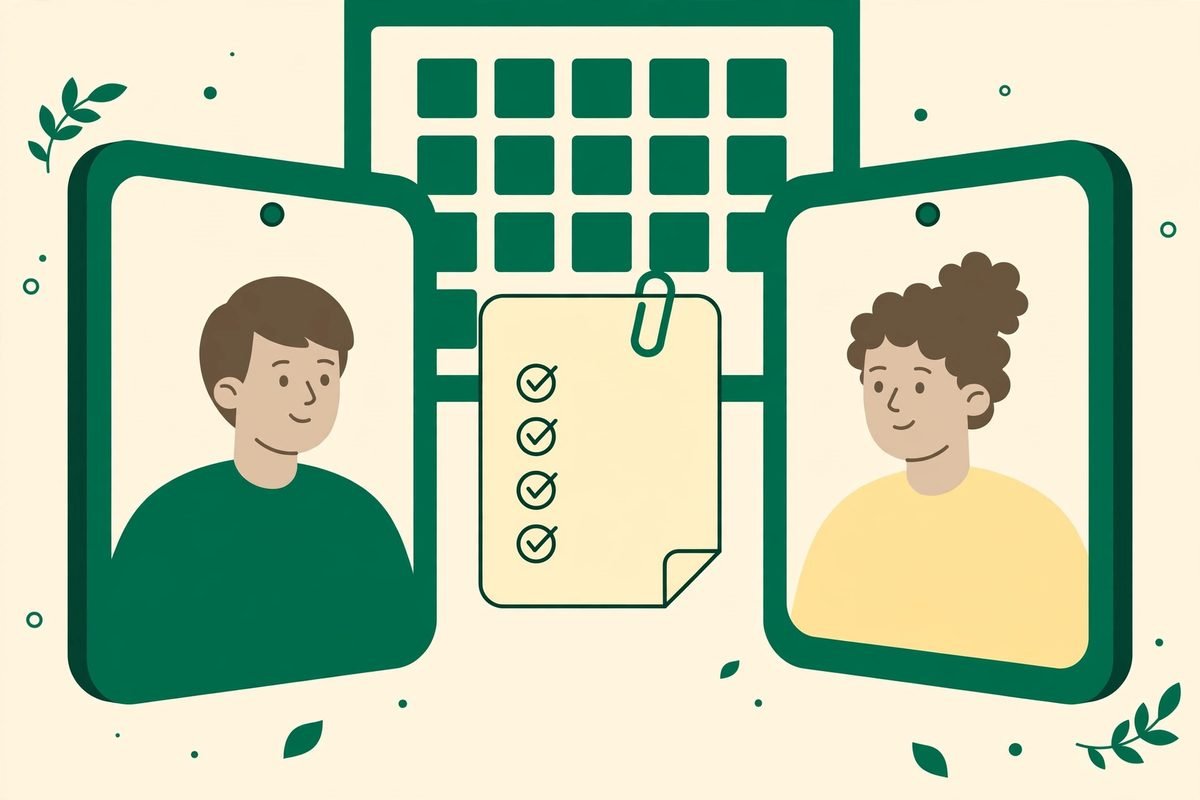
For websites, apps and dashboards, design comes before code. We produce the key screens and layouts first, so you can react to something visual — structure, hierarchy, wording, flow — while changes are still quick. Design feedback works best when it is specific and early: tell us what your customers need to do on each screen, and we will handle how it should look. We iterate on the design with you until the main screens are approved, and only then does development begin in earnest. This stage prevents the most expensive sentence in software: “it works, but it is not what I pictured,” said after everything is already built.
Stage 4: Development in verified stages
Development is split into stages, each ending with something real you can see and test — not a percentage in a status email. Depending on the project, stages might be: foundation and setup, core features, secondary features and integrations, then content and polish. At the end of each stage we show you the working result, walk through what changed, and collect your feedback before moving on. This rhythm does two things. It keeps surprises small, because you are never more than one stage away from seeing the actual state of the work. And it keeps quality verifiable: each stage is checked before the next builds on top of it, rather than everything being tested for the first time at the end.
Stage 5: QA and testing
Before launch, the build goes through structured testing: the main user journeys end to end, forms and payments where they exist, different screen sizes and browsers, and the edge cases people forget — empty states, slow connections, mistakes in input. We also test the operational side: backups, security basics, and what happens when something fails. You get access to a staging version during this stage for your own review, because the people who know the business best often spot things no tester would. Issues found here are fixed before launch, and anything that is a matter of preference rather than correctness is listed openly so you can decide what matters.
Stage 6: Launch
Launch is a planned event, not a hopeful button press. We agree the launch window with you, move the build to production, run post-launch checks on the live version — pages, forms, integrations, tracking — and stay available while real users arrive. For replacements of existing sites or systems, we also handle the practicalities that protect your traffic and data: redirects, preserved content, and a rollback plan if something unexpected appears. Once the live checks pass, the project is formally handed over, with access and documentation in your hands, not held hostage in ours.
Stage 7: Ongoing support
After launch, most clients keep us involved in some form — updates, monitoring, small improvements, and the features that only become obvious once real customers are using the product. Support can be a light-touch arrangement for occasional help or an ongoing retainer for continuous development; the right shape depends on how actively the product is evolving. What stays constant is that you are dealing with the team that built the system, so nothing is lost in a handover. If you would rather take everything in-house, that is fine too: the handover includes what your team needs to run it without us.
Timeline realities, honestly
Timelines depend on scope, and any agency that quotes a precise date before seeing a scope is guessing. What we can promise is structural honesty: the scope document gives you the stage plan, each stage ends with visible work, and if something threatens a date — a delayed decision, content that has not arrived, a third-party approval — we flag it when we see it, not when the deadline passes. The most common cause of delay, in our experience, is feedback and content arriving slowly, which is why the next section exists.
What we need from you
Three things keep a project on track. First, one decision-maker: feedback gathered from your whole team into a single voice, because conflicting instructions are where timelines go to die. Second, timely feedback at stage boundaries — a few days is fine, a few weeks stalls everything behind it. Third, your content and access: text, images, brand assets, and logins for the systems we integrate with, provided when the relevant stage needs them. In return you get a named point of contact, regular updates in plain language, and honest answers when you ask how things are going. If you are weighing up whether to engage us at all, our post on hiring MTD Technologies covers fit and engagement models in more detail.
One more practical detail: communication has a rhythm, not just a channel. Alongside the stage walkthroughs, you get short written updates as work progresses, and questions are answered in plain language — if we ever catch ourselves hiding behind jargon, call us on it. You should never have to chase us for a status update, wonder who to contact, or translate a technical excuse. That standard applies from the first call to the final handover, and it is a large part of why clients stay with us after the first project.
Frequently asked questions
How long does a typical project take?
It depends on scope: a focused website is a matter of weeks, while a custom CRM, app or platform runs longer and is delivered in stages so value arrives progressively. Your written scope will include the stage plan for your specific project, and we flag anything that threatens a date as soon as we see it.
What does the discovery call cost?
Nothing. The discovery call and the written scope that follows it are how we both decide whether the project makes sense. You are not committing to anything by having the conversation.
Can I change things after the scope is agreed?
Yes — real projects always evolve. Changes are discussed openly, and anything that affects cost or timeline is agreed with you in writing before we build it, so there are never surprise charges for work you did not approve.
How will I know how my project is progressing?
Each development stage ends with a working result you can see and test, plus a walkthrough of what changed. You are never relying on a percentage in an email — progress is demonstrated, not reported.
What happens after launch?
You receive full handover — access, documentation, and a system your team can run. Most clients keep us on for support or ongoing development in some form, but that is your choice, and nothing about the build depends on it.
Ready to talk about a project? Start with a message through our contact page — a few lines about what you are trying to achieve is all the first stage needs.