
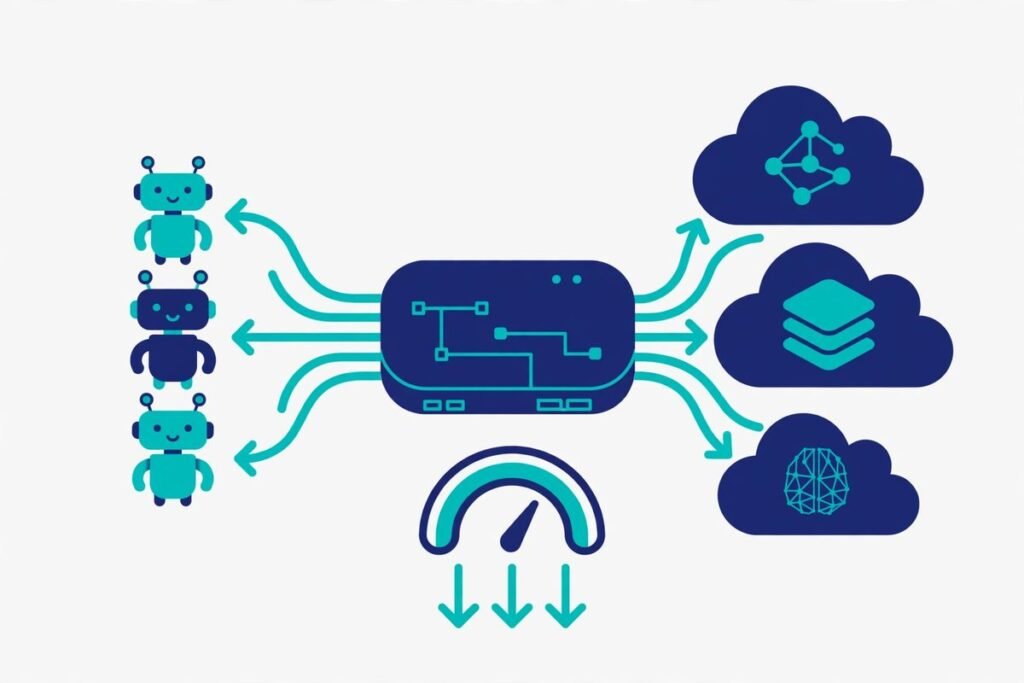
Most teams running AI agents have an AI agent cost management problem they cannot see: every call goes to the biggest model in the stack, the monthly bill arrives as a single number, and nobody can say which agent spent what. Navige is a new launch (Product Hunt, 13 October 2026) that tries to fix this while the calls are still in flight — by routing each request to the smallest model that can handle it, and only charging you out of the savings it can prove. Our verdict up front: the architecture is sound and unusually honest about how it measures savings, but the product is six days old. Treat the paid tier as a pilot, not a platform commitment — and start with the free Watchtower tier, which is exactly what it was built for.
What Navige actually does
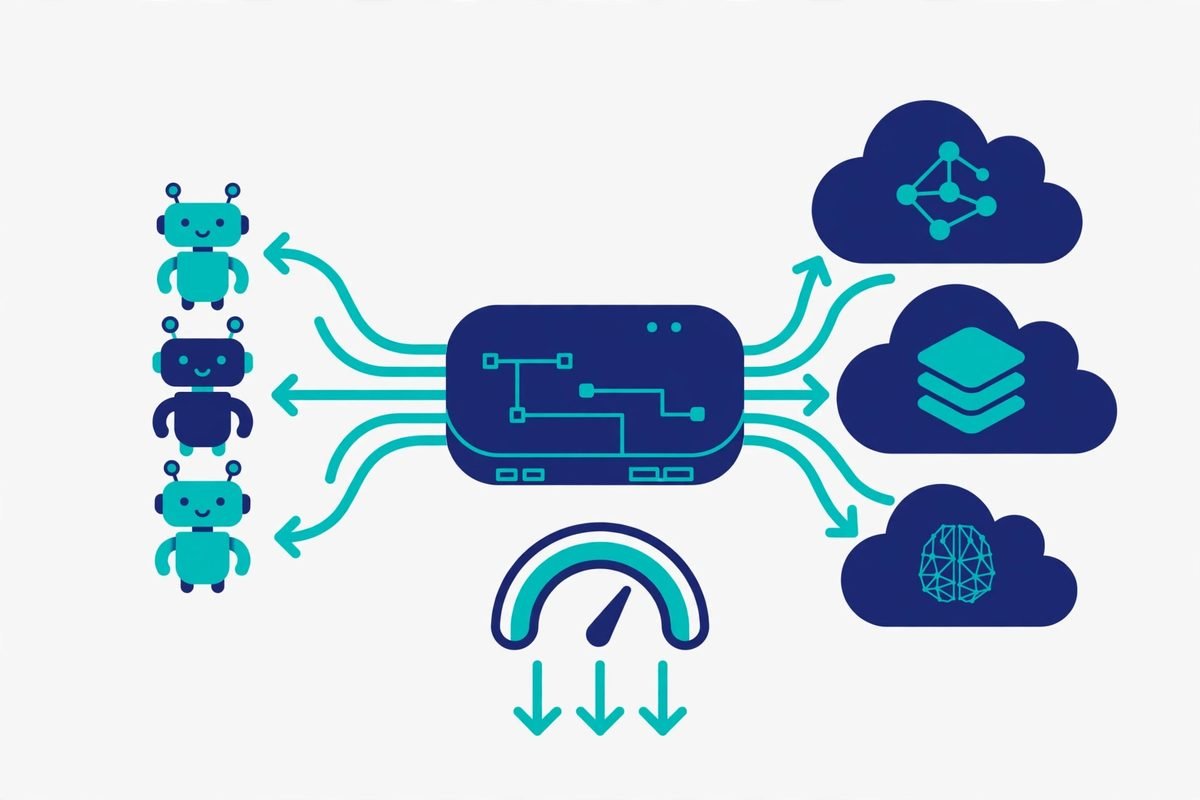
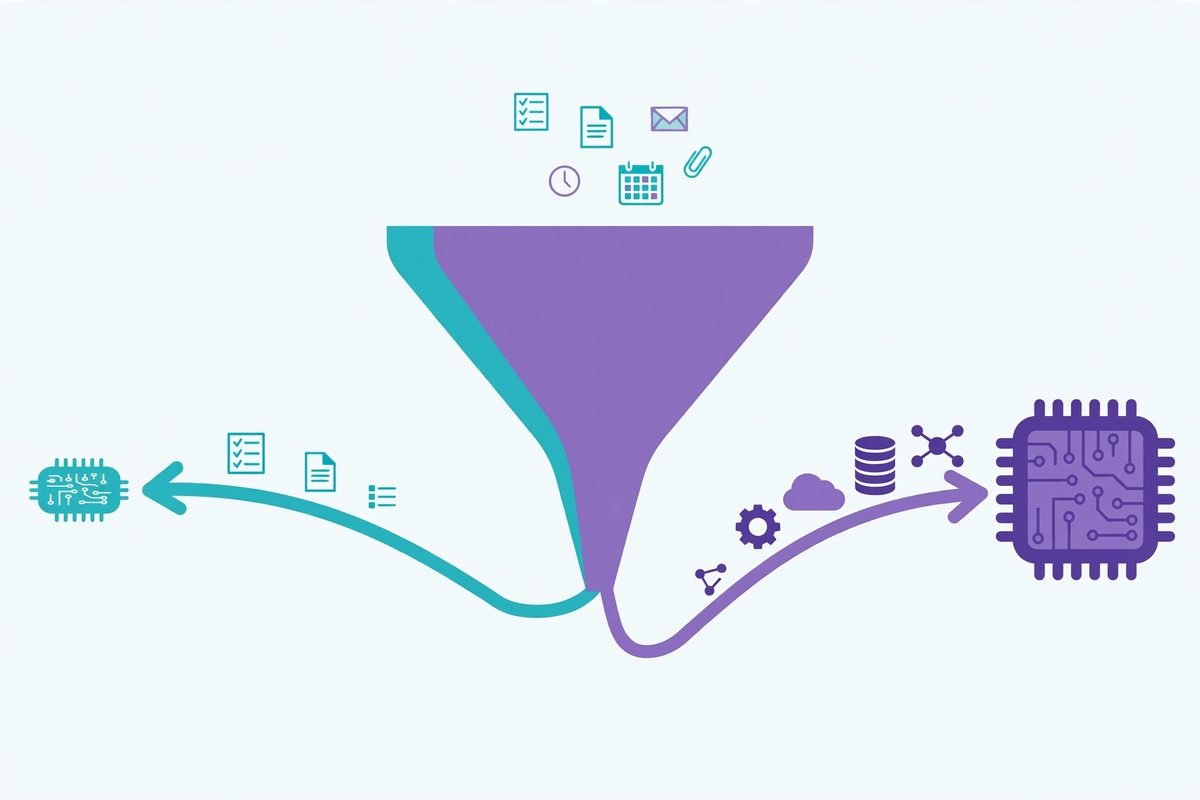
Navige sits in front of your agent’s model calls — you route traffic through it — and acts before each call runs, while the cost can still change. The makers call the underlying idea Sufficiency Intelligence: give each task exactly the intelligence it needs, nothing more. Sorting an email, pulling a date out of a document, picking the next step in a workflow — most of what agents do is not hard, yet it routinely runs on the most expensive model available, because that is the model someone wrote into the code and nobody went back to change.
Around the routing core, Navige adds the control layer you would expect from a FinOps tool: budgets per team and per job, approval holds for risky actions, a kill switch for runaway loops, and an audit trail. It also records every job — what it cost, what the controls changed, and what made the difference — with measured savings and estimates clearly separated instead of blended into one flattering number.
How Sufficiency Intelligence works under the hood
The mechanism is a three-step loop on every routed call:
- Assess and route down only. Navige evaluates each request and sends suitable ones to a smaller model. Your configured model is the ceiling: it only ever moves calls down, never up — and whenever it is unsure, it keeps your original model.
- Fallback with no visible failure. If the smaller model fumbles a tool call, the call re-runs on your original model, and your agent only ever sees that final answer. The routing is invisible to the agent itself.
- Measure, then show the receipt. Every job is logged with its cost, what the controls changed, and what drove the difference. Measured savings and estimates are labelled as such, so you are not making budget decisions on projections dressed up as results.
Two supporting features matter more than they first appear. First, Navige caches repeated reads and trims bulky tool results — two of the quietest sources of token bloat in agentic workflows. Second, you can connect your Anthropic or AWS Bedrock account and put your real bill next to Navige’s figures, so you can check the savings claim instead of trusting it. That reconciliation feature is the one most cost tools skip, and its presence here is a good sign.
Watchtower: the free tier that changes nothing (on purpose)
The smartest product decision in the launch is Watchtower, and it is free forever. You connect your agents’ calls through Navige and keep using them exactly as before. Navige watches, shows you what it would have done differently, and changes nothing until you say so. After a week you get an email with the details: which jobs were running on far more model than they needed, and what the controls would have saved.
This matters for a practical reason. Cost-optimisation tools live or die on trust, and trust is hard to grant to a proxy you installed six days ago. Watchtower lets you verify the routing quality against your own traffic before a single call is ever rerouted. If the proposed savings look real against your actual Anthropic or Bedrock bill, you flip the controls on. If they do not, you walk away having paid nothing. Every vendor in this space should be forced to offer this.

Pricing: you keep four-fifths of the measured savings
The pricing model is refreshingly aligned with the pitch. Watchtower is free forever. On paid plans, of the measured savings Navige can demonstrate, you keep four parts and Navige keeps one — an 80/20 split — subject to a $9/month minimum.
Do the honest maths before you get excited. The 80/20 split means the tool pays for itself whenever it finds real waste — but the $9 floor means teams spending under roughly $45/month on agent inference may find the minimum eating most of the point. That is not a criticism; it is a segmentation signal. Navige is priced for teams with real agent spend: multi-agent fleets, customer-facing agents running at volume, or any setup where a single looping agent once produced a bill that made finance ask questions.
Who Navige is for — and who should pass
Navige fits you if: you run agents on flagship-tier models and suspect much of the workload does not need them; you operate several agents or teams and cannot attribute spend per job; you have lived through at least one runaway-loop invoice; or you need an audit trail and approval holds because agents now touch production systems.
Pass for now if: your monthly agent spend is tiny (the $9 floor will dominate); your agents already run on small, cheap models (there is little ceiling left to route down from); you cannot tolerate an extra network hop in the inference path — a routing proxy adds latency, and latency-sensitive real-time agents should measure this before committing; or your compliance posture forbids request content passing through a third-party service, which is inherent to any gateway design.
How it compares to the alternatives
Navige sits between two established categories. On one side are observability proxies like Helicone and Langfuse: they log, attribute and trace your LLM spend beautifully, but they do not change routing — they tell you where the money went, not how to spend less of it. On the other side are provider-native levers like prompt caching and tiered model selection, which are complementary: you should be using prompt caching anyway, and Navige’s routing stacks on top of it rather than replacing it.
The most common DIY alternative is a hand-coded fallback chain — route to the small model, retry on the big one if the output looks wrong. We build these for clients in our AI agent development work, and they work, but they are brittle: the “does this look wrong” heuristic needs constant tuning, and every model release changes the calibration. Navige is essentially that pattern productised, with the fallback invisible to the agent and the measurement built in.
The naive alternative — just run everything on the cheapest model — is worth naming because teams actually do this. It saves money and silently degrades the tasks that genuinely needed the flagship model, with no fallback and no measurement. Navige’s ceiling rule (never route up, keep your model when unsure) is specifically designed to avoid that failure mode.
From our experience: the practitioner take
At MTD Technologies we have spent nine-plus years building software across 300+ projects, and the last few years building production agent systems — which is why Navige’s diagnosis rings true. The single biggest source of wasted agent spend we see in client work is exactly what the makers describe: a flagship model doing classification, extraction and routing work that a model costing a tenth as much would handle identically. The waste is not in the hard reasoning steps; it is in the thousands of easy steps nobody bothered to re-tier.
Three honest observations. First, the fallback is not free: when the small model fumbles, you pay for both calls. The economics still work if routing accuracy is high — one doubled call in twenty is noise against nineteen 10x-cheaper ones — but “accuracy of the router” is the number to watch in your Watchtower week, not the headline savings figure. Second, separating measured savings from estimates is a genuine trust signal; most tools in this category blend them. Third, the real-bill reconciliation against Anthropic or Bedrock is the feature to actually use — it turns a vendor claim into an auditable number, which is what your CFO will ask for anyway.
When would we not recommend it yet? For anything where the proxy is a single point of failure you cannot afford — the product launched on 13 October 2026, and six days of public history is not a reliability record. Run Watchtower, pilot one non-critical agent, and keep your direct provider integration as the fallback path until the service has earned the critical path. If you are scoping agent work and want help thinking through the cost architecture before you commit to tooling, our agentic AI development team does this as part of every engagement — and our AI Tools Directory tracks more launches in this space as they appear.
Frequently asked questions
What does Navige do?
Navige is an AI agent cost management gateway. You route your agents’ model calls through it; it assesses each request and sends suitable ones to a smaller, cheaper model, with automatic fallback to your original model if the smaller one fumbles. It also provides budgets, approval holds, a kill switch and an audit trail.
How much does Navige cost?
Watchtower, the observability-only tier, is free forever. Paid plans take a 20% share of the measured savings Navige can demonstrate (you keep 80%), with a $9/month minimum. There is no saving, there is no fee beyond the minimum.
Does Navige change my agent’s behaviour?
By design, no — with one deliberate exception. Routing is invisible to the agent: if a smaller model fumbles a tool call, Navige re-runs it on your original model and the agent only sees that final answer. In Watchtower mode nothing changes at all; Navige only observes and reports what it would have done.
Which model providers does Navige support?
At launch, Navige supports connecting Anthropic and AWS Bedrock accounts — primarily so you can reconcile Navige’s reported savings against your real provider bill. Broader provider support has not been announced; check the Product Hunt launch page for updates.
Is Navige safe for production workloads?
It is too early to say. Navige launched on 13 October 2026, so there is no public reliability record or independent review history yet. The sensible path is Watchtower first, then a pilot on a non-critical agent, keeping your direct provider integration as a fallback until the service proves itself.
The bottom line: AI agent cost management is becoming a discipline of its own as agent fleets grow, and Navige’s approach — route down with a safety net, measure honestly, charge from proven savings — is the right shape for it. Start free with Watchtower, verify against your real bill, and let the numbers decide. If you are building agents and want the cost architecture designed right from day one, talk to us — this is the kind of infrastructure thinking we bake into every agent project.