

An open source AI agent framework that actually remembers you is a bold pitch, and OpenHuman is the project currently testing it at scale: more than 42,000 GitHub stars, nine consecutive days at the top of GitHub Trending, and a launch week that put it on Product Hunt’s front page. Here is the verdict up front: if you want a personal AI agent whose memory lives on your own machine instead of in a vendor’s cloud, OpenHuman is the most serious open-source option you can try in 2026. But it is still beta software with genuine privacy caveats, and you should understand both sides before you connect your inbox.
What OpenHuman actually is
OpenHuman is built by TinyHumans AI (the collective tinyhumansai), released under the GPL-3.0 licence, and constructed around a Rust core wrapped in a Tauri desktop shell, with installers for macOS, Windows and Linux. It has two personalities. The first is a desktop personal assistant for non-technical users: install it, connect your apps, and it starts building a memory of how you work. The second is a library-first harness for developers: you can add it to a Rust project and call an agent like any other function, with no sidecar or daemon to babysit.
The project’s own pitch is blunt: the fastest, cheapest, most efficient open-source agent harness, with the claim that more than 500 agents can run on a 10-dollar VPS. That efficiency story is aimed squarely at developers who want fleets of agents, not just one chatbot. Speed claims in the OpenHuman GitHub repository include coding tasks finishing in about 20 seconds and start-up times measured in fractions of a second — vendor claims, but ones that explain the developer enthusiasm driving 4,000-plus forks.
The Memory Tree: the one idea that matters
Every large language model shares one fundamental limitation: it is stateless. You type a prompt, you get a response, and the context evaporates. Even models with “memory” features store a handful of bullet points, which the OpenHuman team memorably dismisses as a sticky note, not intelligence.
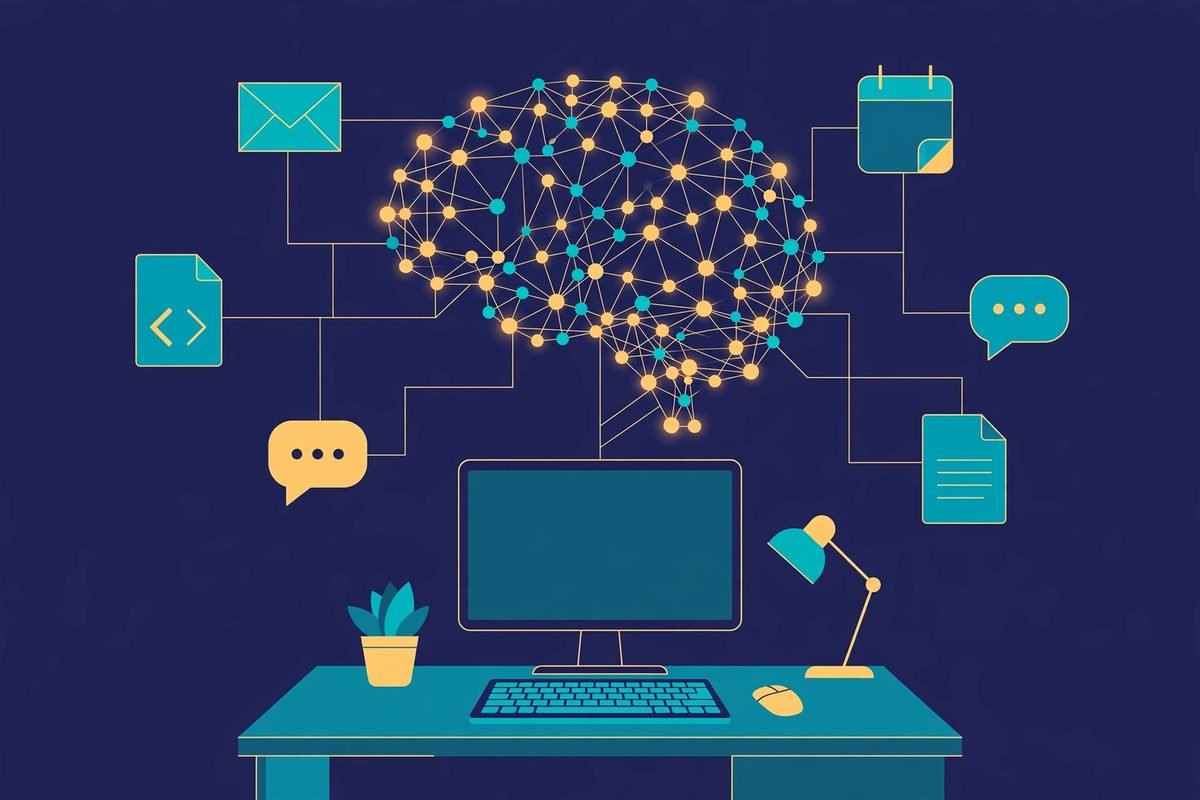
OpenHuman’s answer is the Memory Tree: a deterministic pipeline that ingests everything you connect — Gmail, Slack, GitHub, Notion, your notes — converts it into canonical Markdown, splits it into chunks of roughly three thousand tokens, scores and folds them into per-source, per-topic and per-day summary trees. That memory lands in a local SQLite database on your machine, and — critically — as an Obsidian-style vault of plain Markdown files you can open, read, edit and link by hand. You cannot trust a memory you cannot read, and a memory you can audit is a different proposition from the vector-soup black boxes most agent tools hide behind. Every twenty minutes, the system quietly pulls fresh data from every active connection, so the agent already has this morning’s context without being asked.

What OpenHuman can do
The feature set is wide for a project that launched in May 2026. From the repository’s own capability list, what ships includes:
- Configurable memory recalled before every turn, with citations, on the memory engine of your choice.
- 118-plus integrations through one-click OAuth — Gmail, GitHub, Slack, Notion, Stripe, Calendar, Drive, Linear, Jira and dozens more — with triggers that start the agent when something happens.
- Voice agents you can interrupt mid-sentence, plus dictation and spoken replies.
- Computer and browser control that drives a real Chrome browser and your desktop apps, asking permission before anything it cannot undo.
- Search agents with Exa and Gemini included, plus Brave, Tavily and others on your own key, with grounded answers and Deep Research.
- Native tools: shell and coder, scraper, documents, image and video generation, cron.
- MCP servers and skill bundles, so it plugs into the emerging agent-tool ecosystem.
- Fourteen messaging channels as agent front ends — Telegram, Discord, iMessage, email and more.
- Durable workflow graphs with cron, event or manual triggers, approval steps, and resume-after-pause.
- Model flexibility: local models via Ollama, LM Studio or MLX, or bring-your-own-key across 26 providers, with automatic model routing.
- Usage tracking: per-call cost and token usage with replayable run journals.
One feature deserves special attention: TokenJuice, an on-device prompt compressor that trims redundant tokens from agent calls. The team claims it cuts model API costs by up to 80 percent on long-running workflows. If that number holds on real workloads, it changes the unit economics of running agents continuously — the difference between an experiment and a product is often just the monthly token bill.
How the pricing works
The application itself is free and open source, so the paid tiers are not buying you the software — they are buying hosted model access and credits. As independently reviewed in late September 2026, the tiers are: Basic at 20 dollars a month (or 200 a year), Pro at 200 dollars a month (or 2,000 a year), Enterprise on custom pricing, and token top-ups starting at 5 dollars.
In practice you have three ways to run it. Bring your own API keys and pay your model provider directly. Point it at a local model through Ollama or LM Studio and pay nothing per token at all. Or pay TinyHumans for hosted access and skip the key management. For a single user doing personal productivity work, the BYOK route is usually the honest answer — you keep control of the billing relationship and OpenHuman is just the harness. Per an independent review of the September pricing, the free app plus your own keys is the configuration most privacy-motivated users should start from.
Who it’s for — and who it’s not
OpenHuman fits best when the buyer looks like one of these. Power users drowning in SaaS context who want one agent that already knows their calendar, inbox and repos instead of being briefed from scratch every session. Developers building agent fleets who like the idea of a Rust library where one runtime holds hundreds of agents, each with its own model, tools, memory and sandbox. Privacy-conscious operators who would rather their memory layer sit in a local SQLite file than in a third-party data centre — with the caveats we cover below. And indie builders prototyping personal AI products who want to ship something memory-driven without building the memory layer from scratch.
It is not for teams — this is a single-user, desktop-bound product, and if your laptop is off, your agent is off. There is no managed multi-tenant version and no official multi-device sync, so the person with the laptop holds the memory. And it is not for regulated environments where you need an audited, vendor-backed security story, because that story does not exist yet.
Honest watch-outs before you connect your Gmail
The marketing is strong; the fine print matters more. Here is what we would want a client to know before a single OAuth token is granted.
- It is early beta. The README says so itself — “expect rough edges” — and the release cadence is nearly daily. That velocity is great for a hobbyist and nerve-wracking for anyone whose workflow depends on the tool.
- The “local-first” story has one real exception. Your memory and vault stay on your machine, but your OAuth tokens are held by TinyHumans’ backend, which brokers every integration request. So the data at rest is local; the control plane is not. If a client NDA forbids third-party access to their accounts, this distinction needs to be disclosed and decided, not assumed away.
- Privacy Mode is not total. It blocks cloud model calls, network tools, web search, integrations and cloud embeddings — but voice is exempt, and sign-in, billing and connection-management traffic keeps talking to the backend.
- No independent security audit is published. As of late September 2026, no third-party review of the code or the backend has been released. For software that asks for your Gmail, that is the single biggest gap in the trust story.
- Desktop-bound means downtime. The 20-minute auto-fetch, the triggers, the background workflows — all of it stops when your machine sleeps. If you need agents working overnight, a desktop app is the wrong shape.
- Treat the cost claims as hypotheses. TokenJuice’s 80 percent saving and the 500-agents-on-a-10-dollar-VPS pitch are the team’s own numbers. Run your own benchmarks on your own workload before either figure goes into a budget or a proposal.
How it compares to the alternatives
Open WebUI is the closest thing in the self-hosted world, but it solves a different problem: it is a chat portal for running local models, not an agent with persistent memory and integrations. AnythingLLM is a document-workspace chat tool — excellent for RAG over your files, not a personal agent that acts across your apps. OpenClaw-style harnesses are built to serve your users — multi-tenant, audience-facing surfaces — while OpenHuman is deliberately your personal assistant on your machine. And code-first frameworks like LangChain or CrewAI give you maximum control with zero product surface: no desktop app, no memory product, no one-click OAuth. OpenHuman’s bet is that many people want both the library and the product.
From our experience: the practitioner take
At MTD Technologies we have spent nine-plus years building automation for businesses — from our n8n workflow automation work to custom AI integrations — and agents fail in production for three boring reasons: no durable memory, token bills that scale faster than revenue, and setup that only the person who built it can operate. OpenHuman attacks all three at once, which is why it deserves attention rather than a shrug.
The Memory Tree is the genuinely interesting part. A readable Markdown vault you can audit beats an opaque vector index the day a client asks “exactly what does this thing know about me?” — and being able to open the memory in Obsidian and correct it by hand is a workflow no enterprise agent platform currently offers. The small-footprint Rust core plus token compression matters for the same reason it always does: the unit economics of a per-customer agent decide whether the product exists at all. And one-click OAuth beats wiring API keys for non-technical operators, full stop.
But here is when we would say no. We would not run a client’s production workflow on beta desktop software — the breaking-change risk is real, and a desktop machine is not infrastructure. We would not deploy it across a team until multi-user and server-side operation exist. And we would require a written disclosure about the backend-held OAuth tokens before connecting any client account under NDA, because the memory is local but the plumbing is not fully. Use it for personal productivity automation, for prototypes of memory-driven agents, and for dev-side experimentation. Skip it for team deployments, compliance-heavy data, and anything where you cannot tolerate a beta breaking change. If you are comparing agent platforms more broadly, our AI tools directory tracks the category as it moves.
Frequently asked questions
Is OpenHuman really free?
The application is free and open source under GPL-3.0. The paid plans — Basic at 20 dollars a month, Pro at 200 a month, Enterprise custom — buy hosted model access and credits, not the software. Connect your own API keys or a local model through Ollama and the marginal cost is whatever your provider charges.
Does OpenHuman work offline?
Partially. Privacy Mode blocks cloud model calls, network tools and integrations in the core, but sign-in, billing and connection-management traffic still reaches the backend, and the auto-fetch of your sources needs connectivity anyway. A local model via Ollama or LM Studio gets you closest to a fully offline setup.
How is OpenHuman different from ChatGPT or Claude?
Those are stateless products whose memory lives with the vendor. OpenHuman’s memory is a local SQLite database plus a Markdown vault on your own machine that you can read and edit, the code is open source, and the agent can act across 118-plus connected apps rather than only inside a chat window.
Can OpenHuman replace Open WebUI or AnythingLLM?
Different jobs. Open WebUI is for chatting with local models; AnythingLLM is for question-answering over your documents. OpenHuman is an agent with persistent memory and app integrations that takes action. In a serious local-AI setup, they complement each other rather than compete.
Is OpenHuman safe to connect to my Gmail?
Your email content lands in a local store, not on a vendor’s servers — but your OAuth tokens are held by TinyHumans’ backend, and no independent security audit has been published. It is beta software. Start with a secondary account, review Privacy Mode in the documentation, and only connect your primary inbox once you are comfortable with that trade-off.
OpenHuman is the rare open-source launch that earns its hype: a real architectural idea in the Memory Tree, honest engineering in the Rust core, and traction — 42,000 stars do not happen by accident. Whether it is right for you depends on what you need it to be: a personal agent with a memory you can read, it already is; a team-ready, audit-backed platform, it is not yet. If you are evaluating an open source AI agent framework for a business workflow, or trying to decide whether a memory-driven agent is worth the build cost, talk to us — scoping exactly that trade-off is what we do.