
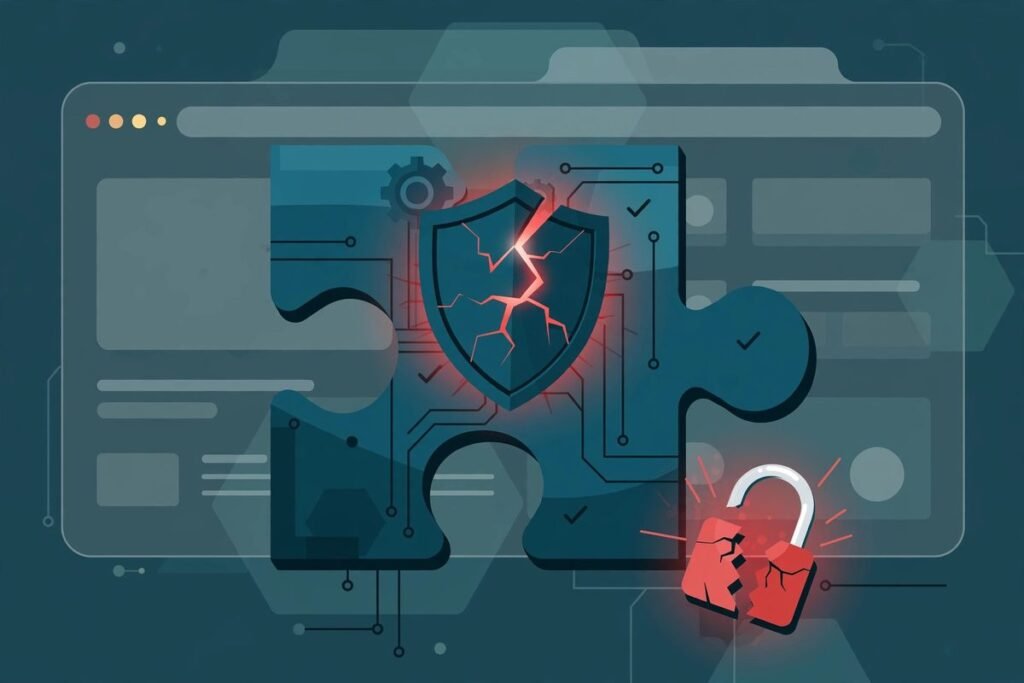
Every agency developer has met the client who asks, innocently enough: “Why pay for that premium plugin when I can download it free from this site?” Nulled WordPress plugins — premium plugins redistributed with their license checks stripped out — look like a shortcut. They’re not. They’re one of the most expensive mistakes a business can make with its website, and in 2026 the evidence against them is stronger than ever.
If you run a business on WordPress, this is not a theoretical risk. It’s a bill that comes due in the form of hacked sites, tanked rankings, and breached customer data.
What “nulled” actually means
A nulled plugin is a paid plugin copied, cracked, and re-uploaded to third-party download sites, “GPL clubs,” and Telegram channels. The license verification is removed so the plugin activates without paying the developer.
Here’s the part nobody on those download sites will tell you: the person who nulled the plugin had full access to its code before you did. Removing a license check requires editing files. Adding a backdoor requires the same level of access — and for the person running the free-download business, a hidden backdoor is far more profitable than the download itself.
Even in the rare case where a nulled copy is “clean,” it is frozen in time. You get the code as it existed on the day it was cracked. No security patches. No bug fixes. No compatibility updates. On a platform where critical flaws are patched weekly, running frozen plugin code is like driving on a motorway with no brakes.
What’s changed in 2026: you can’t afford to be outside the update channel
The security landscape this year has made the update channel — the official path through which WordPress.org ships patches — the single most valuable thing a site owner has. Here’s why.
In April 2026, WordPress.org permanently closed 31 plugins after a supply chain attack. A buyer had acquired the plugin portfolio, inherited commit access, and pushed a backdoor disguised as a routine compatibility update. It sat dormant for eight months. Then, in early April, it woke up: affected sites had malicious code written into wp-config.php, and the injected spam was served only to Googlebot — site owners browsing their own pages saw nothing wrong. According to analysis of the April 2026 supply chain attack, WordPress force-updated affected installations and closed the plugins on April 7. The lesson: the only people who got protected were people on the official update channel. If you’d been running a nulled copy of any of those plugins, you’d never have received the fix — and you’d have no way of knowing you were compromised.
Then in September 2026, WordPress launched automated security reviews for every plugin release before distribution, plus a “cooldown period” for updates — an initiative called Protect The Shire that deliberately slows down update distribution so malicious releases can be caught before they reach sites. Again, this entire safety net only covers users who install plugins from the official source. Nulled users are standing outside the fence, watching the security team work for everyone else.
And the attacks keep coming. In early October 2026, attackers exploited stored-XSS flaws in Ninja Forms (installed on over 500,000 sites) and a WooCommerce product-bundles plugin to deploy backdoors and rogue admin accounts. Threat actors go where the install base is. The plugins people most often download nulled are the popular, expensive ones — precisely the plugins attackers target.
The pattern in WordPress communities backs this up. In Facebook groups for site owners and freelancers, members regularly post warnings about nulled themes and plugins — the recurring complaints are malware infections, SEO damage, stolen data, and sites hacked months after the install. One observation comes up again and again: scans often come back clean at first, because dormant payloads only activate later. Exactly like the April supply chain attack.
Bottom line: in 2026, a plugin’s value isn’t just its features. It’s its update channel. Nulled plugins have none.
The real invoice: five ways a nulled plugin bills you later
Let’s put numbers to the “savings.” A typical premium plugin license costs somewhere between $49 and $199 a year. Here is what the free copy can cost instead:
- Backdoors and admin takeovers. The most common payload. Attackers create hidden administrator accounts or install web shells that let them run commands on your server. Your site becomes a launchpad for spam campaigns and attacks on other sites — and your hosting provider can suspend your account for it.
- SEO poisoning and blacklisting. Injected spam pages and links are served to search engines while your site looks normal to you. Rankings collapse, Google Search Console flags the site, and browsers start showing “this site may be hacked” warnings to your customers. Recovering from that takes months — if it happens at all.
- No security updates. When a critical flaw is patched — as happened with the Ninja Forms campaign this October — legitimate users update in minutes. You don’t, because your copy can’t phone home without exposing itself. Every public vulnerability in that plugin version is now a standing invitation.
- No support, and compatibility breakage. Premium plugins update alongside WordPress core, WooCommerce, and PHP versions. A frozen nulled copy breaks silently when the rest of the stack moves on — often in the middle of a sale or a campaign. There’s nobody to email for help, because you were never a customer.
- Legal and trust exposure. The developers whose work you’re using have license terms, and commercial use of pirated software is a liability. Worse: if customer data is breached through a plugin you knowingly installed from a piracy site, explaining that to clients — or regulators — is not a conversation you want to have.
The honest math: “savings” versus real alternatives
Add up a single cleanup: emergency remediation, days of downtime, lost rankings, and the reputational cost of telling customers their data may have been exposed. It routinely costs ten to fifty times the price of the license you skipped. The nulled plugin isn’t cheaper. It’s just billing you later, with interest.
And you have real alternatives:
- Buy the license. For a business site, a plugin subscription is an operating cost, like hosting or SSL. It’s the cheapest insurance in your stack.
- Use genuinely free plugins. The official WordPress directory has excellent free options for forms, SEO, caching, and security. Free is fine; stolen is not.
- Build it once, own it forever. If you need premium features without premium subscriptions, a custom-built plugin does exactly what your business needs and nothing you don’t pay for. Our guide to WordPress plugin development costs breaks down what that investment actually looks like.
Frequently asked questions
Is using a nulled plugin actually illegal?
Nulled distribution sites hide behind arguments about the GPL, but the reality is murkier than their marketing suggests. At minimum, you’re using commercial software outside its license terms — and if your business depends on the site, that’s a liability your lawyer wouldn’t sign off on. The malware risk usually dwarfs the legal question anyway.
Can’t I just scan a nulled plugin with antivirus before installing it?
No. Scanners catch known malware signatures, but they can’t catch a backdoor that’s designed to sleep. The April 2026 supply chain attack proved this: malicious code sat dormant for eight months in plugins people had already scanned and trusted. A clean scan today says nothing about what the code does next month.
I think I already have nulled plugins installed. What should I do?
Don’t panic, but don’t wait. Delete the nulled copies and reinstall from the official source (or buy the license). Then rotate all passwords, check for unknown administrator accounts, scan the site with a security plugin, and inspect wp-config.php and recently modified files for anything you didn’t put there. If the site was already acting strangely — redirecting visitors, ranking for spam keywords — get professional help with the cleanup. If you’re unsure whether your site is carrying one of these, talk to us and we’ll take a look.
Are all unofficial plugin download sites dangerous?
Treat every unofficial source as untrusted. Even sites that claim to scan their uploads can’t verify what dormant code does later, and several have been caught distributing infected copies themselves. The only safe download is the one from the developer or WordPress.org.
Premium plugins cost money because developers maintain them — the updates, the security patches, the support tickets answered at midnight are what you’re paying for. A nulled copy strips out the payment and keeps everything except the parts that protect you. For a business website, that’s not a bargain. It’s a risk you chose.
If you’d like a second opinion on your site’s plugin stack — what’s safe, what’s redundant, and what’s quietly dangerous — get in touch with our WordPress team. We audit this stuff every week.