
Your website is often the first meeting a customer has with your business — and unlike a meeting, you don’t get to read the room. The signs you need a website redesign rarely arrive as a dramatic failure. They creep in quietly: a bounce rate that keeps climbing, a contact form that stays empty, a site you’re slightly embarrassed to put on a business card. As developers who rebuild business websites for a living, we’ve learned that owners usually know something is wrong long before they can name it. This is the checklist we use to make it concrete.
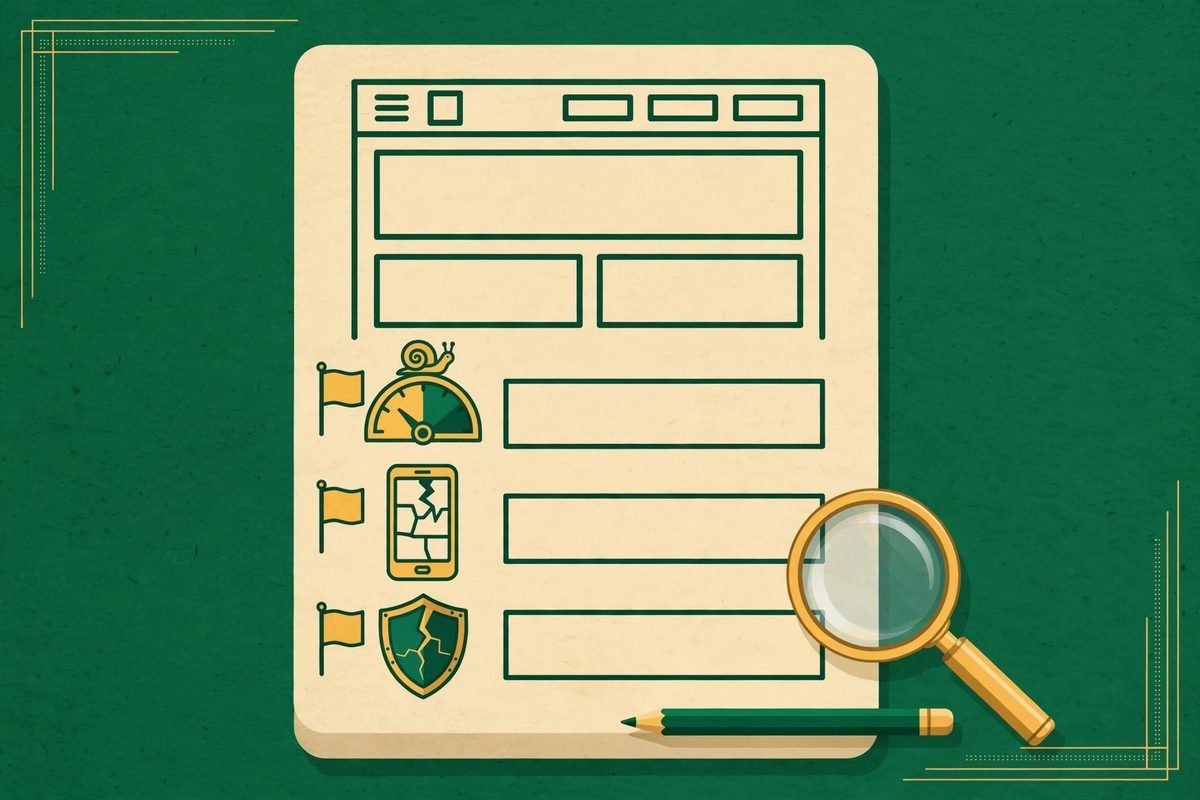
The 7 signs your business website needs a redesign
1. It falls apart on a phone — and that’s where your customers are
Open your site on a mid-range Android phone, not your office laptop. If text overlaps, buttons are too small to tap, or the mobile menu refuses to behave, you’re losing real business. Mobile accounts for roughly two-thirds of Google search traffic, and studies consistently show the majority of users won’t return to a site that gives them a bad mobile experience. A “desktop-first, mobile-tolerated” layout is not a quirk — it’s a design from a previous era of the web.
2. It’s painfully slow
Speed is the one metric visitors feel before they think. More than half of mobile users abandon a page that takes longer than three seconds to load, and the probability of a bounce jumps by nearly a third when a page goes from one second to three. If your site still runs a heavy theme with a dozen plugins you don’t understand, every extra second is a tax on every visitor. We covered exactly how to diagnose this in our website speed optimization checklist — if your site scores badly there, slowness alone justifies the redesign conversation.
3. The content describes a company you used to be
Read your homepage like a stranger would. Does it mention services you no longer offer, pricing from three years ago, or team members who’ve moved on? A site frozen in 2021 tells visitors the business is frozen too. This is the most common sign we see: the company evolved, the website didn’t, and now the marketing promise and the actual business have drifted apart.
4. Every small change needs a developer
If updating a headline or swapping a photo means opening a ticket and waiting two weeks, your site isn’t a tool — it’s a dependency. Modern sites are built so the business can edit content freely while the structure stays solid. When simple edits feel risky or expensive, the underlying architecture is working against you, and a redesign is cheaper over time than the drip of developer hours for trivial changes.
5. Visitors arrive but never contact you
Check your analytics: decent traffic, but a trickle of enquiries. That’s a conversion problem, not a marketing problem. Common culprits are buried contact pages, vague calls to action (“Learn more” means nothing), forms that ask for too much, and service pages that describe features instead of outcomes. A redesign isn’t about prettier pages — it’s about rebuilding the path from visitor to customer.
6. Your competitors’ sites make yours look like a relic
Customers compare. If a prospect checks three agencies or three suppliers and yours is the only site with a slider from 2016, mismatched fonts, and a hero image of a handshake, the comparison is over before it starts. Design is a trust signal. You don’t need the flashiest site in your industry — you need one that doesn’t silently concede credibility to whoever invested last.
7. Google seems to ignore it
A site that never appears in search results for its own services is usually a site Google can’t comfortably recommend: no mobile-first layout, failing Core Web Vitals, thin or duplicated content, broken internal structure. You can patch some of this, but a site built before the mobile-first index often carries structural SEO problems that are cheaper to fix in a rebuild than in surgery. If you’ve been invisible on Google for years, the platform itself is a sign.
The ground shifted while you weren’t looking
It’s worth understanding why a site that was fine five years ago isn’t fine now, because the web’s baseline moved on several fronts at once. Google’s index is now 100% mobile-first crawled, meaning the phone version of your site is the one being judged. Speed expectations hardened too: the median mobile page still needs several seconds to fully load in field tests, while users expect under two — and the data on what slowness costs is stark. As compiled in Colorlib’s 2026 site speed statistics, 53% of mobile visits are abandoned when a page takes longer than 3 seconds to load (originally Google Consumer Insights research), and a one-second delay has long been associated with roughly a 7% conversion cut. On the mobile-design side, responsive design data shows the mobile conversion gap narrowing for well-built sites — 2.9% on mobile versus 4.1% on desktop — which cuts both ways: a good mobile experience closes the gap, a bad one leaves money on the table. A redesign isn’t chasing fashion; it’s catching up to the rules the web now plays by.
What a proper redesign actually changes
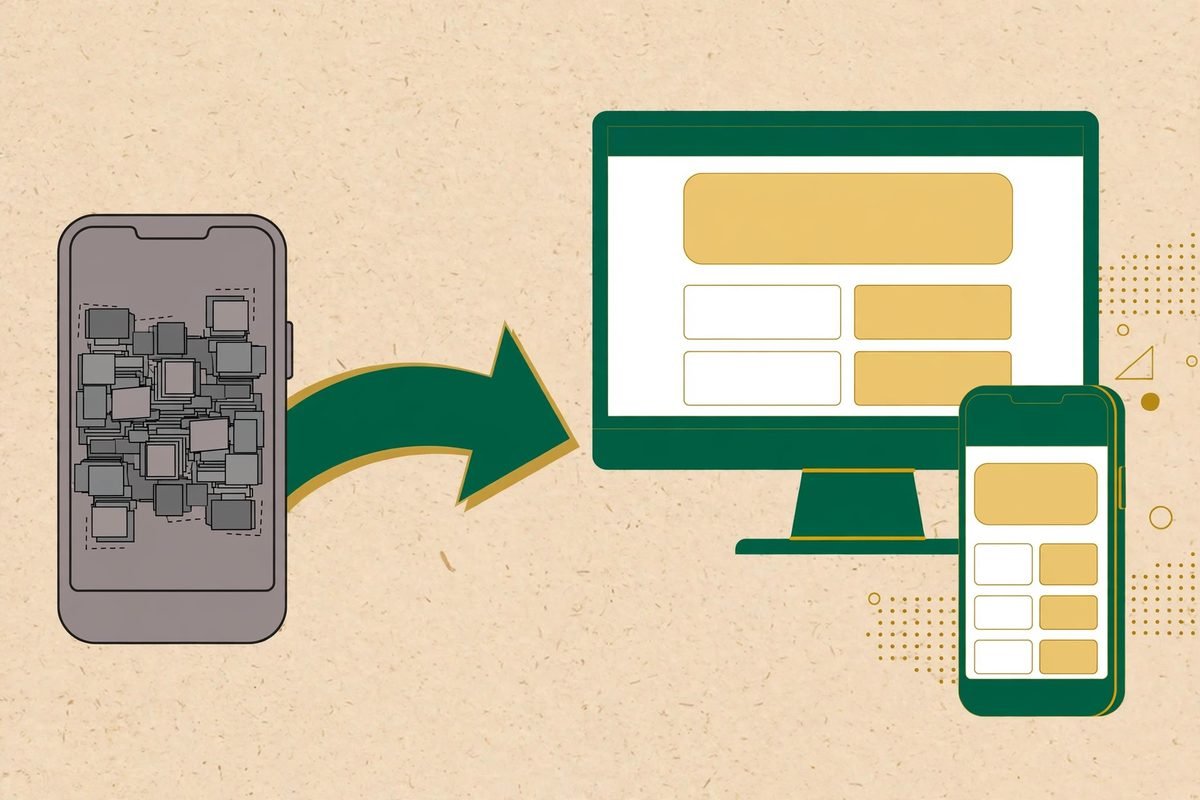
Here’s where expectations often go wrong: a redesign is not a fresh coat of paint. The five-figure “reskins” we decline usually skip the things that actually move the needle. When we take on a redesign for a client through our web development services, the work breaks down roughly like this:
- Information architecture. Rebuilding the sitemap around what customers actually look for, not your internal org chart. Most old sites have pages buried four clicks deep that should be one click away.
- Conversion paths. Every key page gets one clear next step — call, quote, demo — instead of five competing buttons. This is usually where the enquiries-per-visitor number moves.
- Performance budget. The new site ships with speed targets, not speed hopes: optimized images, lean code, no plugin sprawl. If the old site needed nine plugins to do what one custom build does, those plugins don’t survive.
- Editing control. You get a CMS setup you can actually use — change text, add pages, publish news — without fearing you’ll break the layout. This alone pays for itself within a year for most businesses.
- Trust infrastructure. HTTPS, clear privacy policy, real photos, accessible contrast and type sizes, consistent branding. Boring stuff that quietly raises conversion.
Notice what’s not on the list: a trendy hero animation, or a homepage video that costs visitors three seconds of loading time. Good redesigns are surgical. If an agency pitches you aesthetics without talking about the five items above, you’re buying decoration, not a rebuild.
Frequently asked questions
How often should a business website be redesigned?
Roughly every 3–4 years for most businesses, sooner if the business model or audience changes. But the calendar is the wrong trigger — the seven signs above are the right one. A well-built site that still converts and still loads fast doesn’t need a redesign just because it’s four years old.
Will a redesign hurt my SEO?
A badly managed one will. URL changes need 301 redirects, the content that ranks needs to survive the rebuild, and the site structure should improve, not scramble. A properly handled redesign usually improves SEO — faster pages, better mobile experience, cleaner structure are all ranking factors. Ask whoever does the work how they handle redirects and migration; if the answer is vague, find someone else.
How much does a website redesign cost?
It depends on scope: a focused rebuild of a small business site starts in the low thousands, while larger sites with custom functionality run much higher. We broke down the real cost drivers — scope, content, integrations — in our guide to custom website costs in 2026. The honest math: compare the quote against what your current site is costing you in lost enquiries.
Can I just refresh the homepage instead of a full redesign?
Sometimes, yes. If the site is fast, converts, and edits easily, but just looks dated, a design refresh of the key templates can be enough. The seven signs exist precisely to tell these cases apart: one or two cosmetic signs point to a refresh; slow, uneditable, and invisible point to a rebuild.
If you read this list and recognised three or more signs, your website is working against you, not for you. The good news: a redesign that fixes the underlying structure — speed, conversion paths, editing control — is one of the few investments where the before-and-after is genuinely measurable. If you’d like an honest assessment of where your site stands, get in touch — we’ll tell you straight whether you need a redesign, a refresh, or nothing at all.