
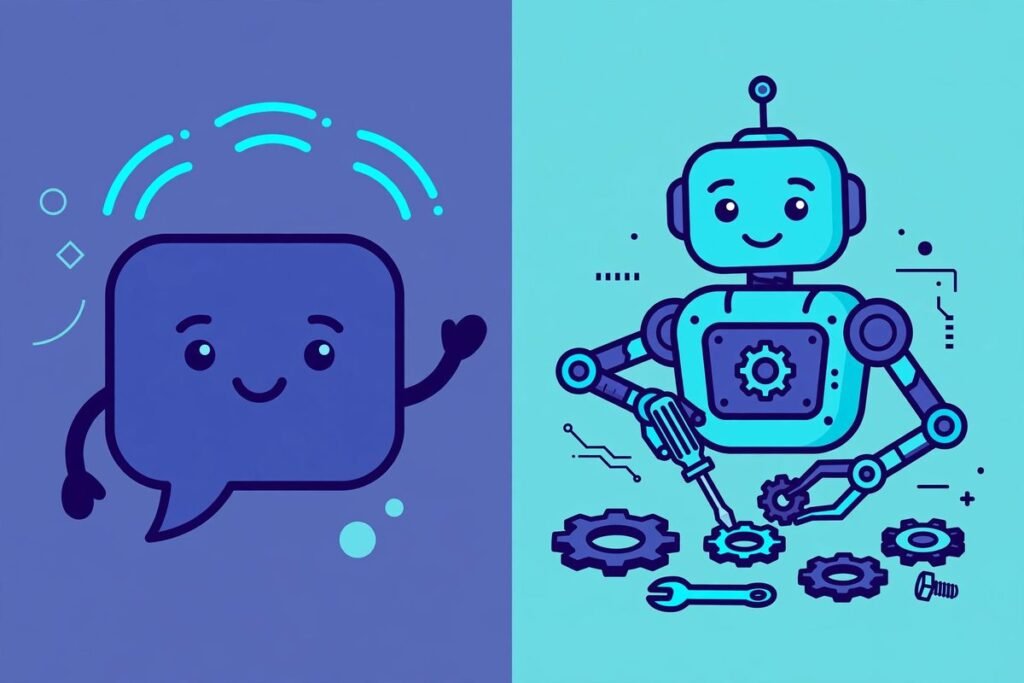
Vendors use “chatbot” and “AI agent” interchangeably, which is convenient for them and expensive for you. They are different tools with different costs, different failure modes, and different jobs they’re actually good at. Pick the wrong one and you either overpay for capability you’ll never use or underbuy and end up with a bot that frustrates your customers. Here’s the practical difference.
What a chatbot actually is
A chatbot is a conversational interface: it talks to the user and, in modern AI versions, understands intent well enough to answer from your content. Its job is communication — answering FAQs, qualifying a lead with three questions, booking a slot, pointing to the right page. It lives in a chat window and its world ends at the conversation.
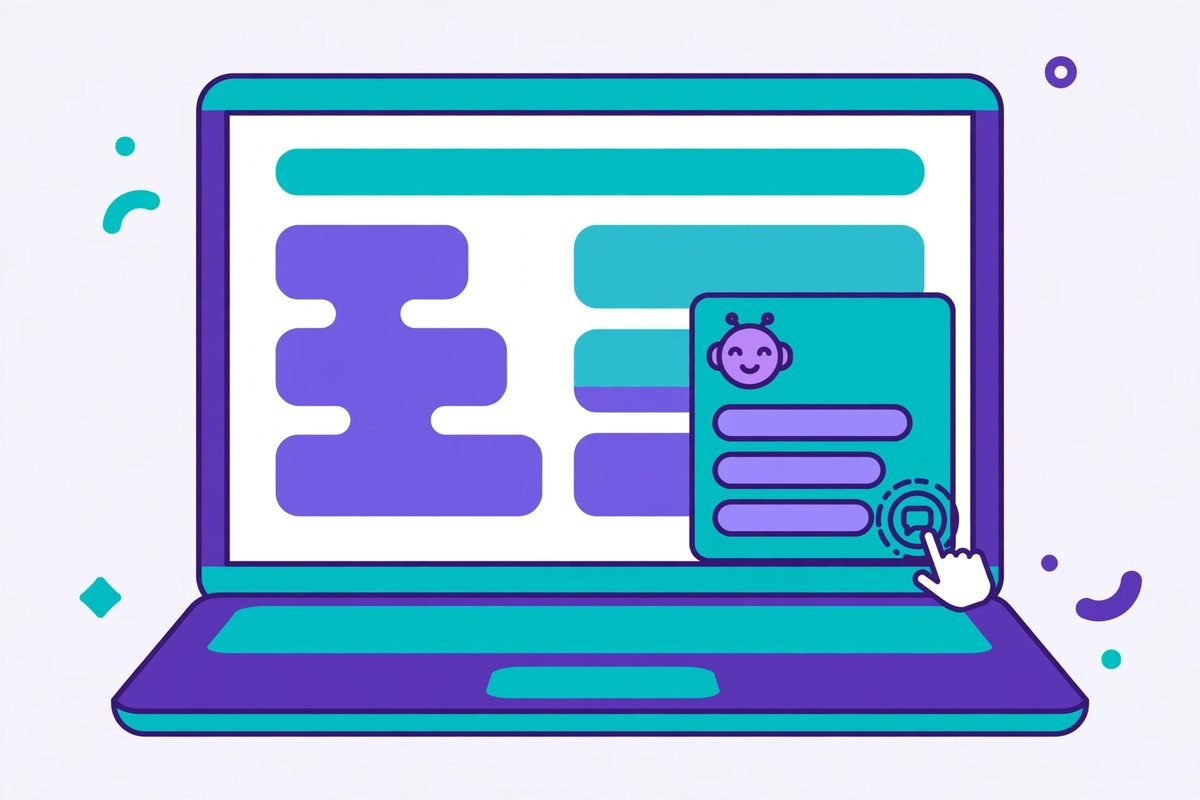
What chatbots do well: deflecting repetitive questions (the “what are your hours / do you deliver to X” tier), capturing leads after hours, and giving instant answers instead of making visitors hunt through your site. What they don’t do: take actions in your other systems. A chatbot can tell a customer their order shipped; it can’t check the warehouse system itself unless someone wires that up — at which point you’re drifting into agent territory.
Cost reality: a solid AI chatbot grounded in your own content typically runs $1,500–$5,000 to build, plus modest monthly API costs. It’s a contained project with a contained bill.
What an AI agent actually is
An AI agent is software that does things: it perceives a situation, makes a plan, and uses tools — your CRM, your email, your spreadsheets, your APIs — to carry it out across multiple steps. A chatbot answers “where is my order?”; an agent checks the order system, sees it’s delayed, drafts an apology email, flags the account in the CRM, and notifies the warehouse — then reports back what it did.
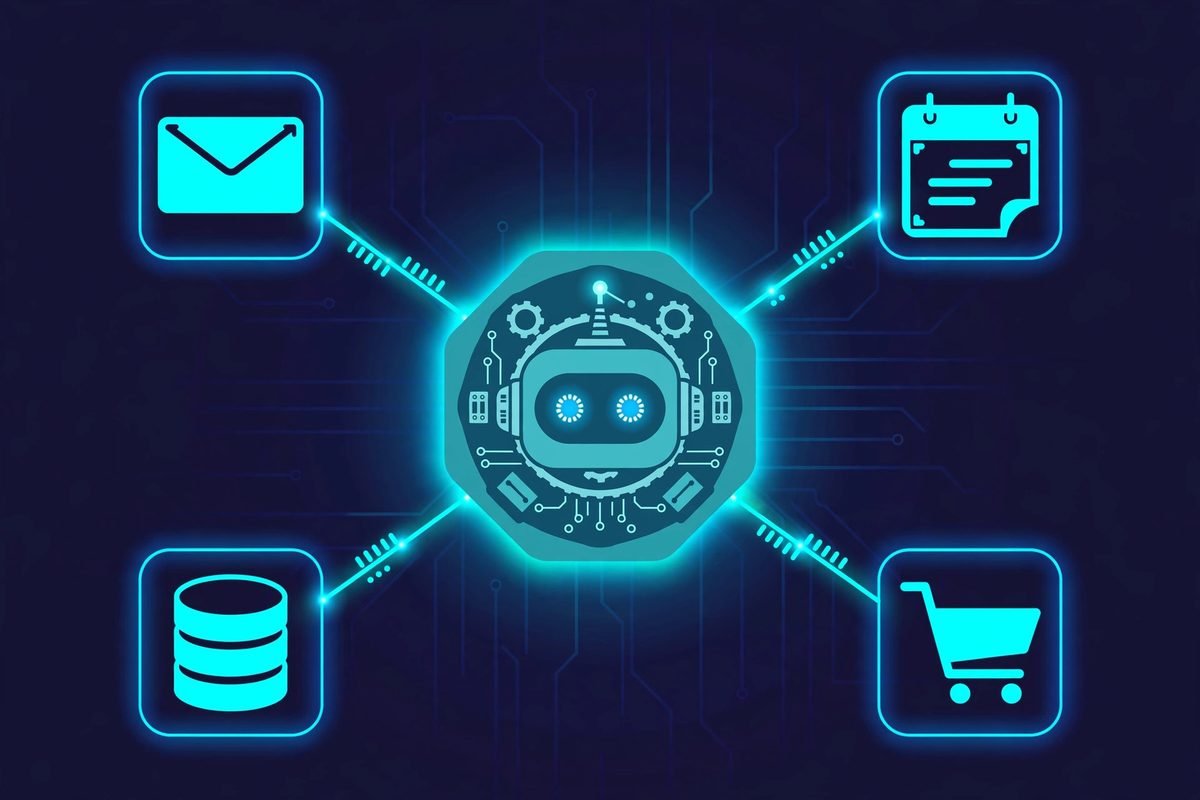
The power — and the price — is in the tool connections. Every system the agent touches needs credentials, error handling, and someone who understands what “done” looks like. Agents are genuinely transformative for multi-step back-office work: lead enrichment and routing, invoice chasing, data syncing between systems that were never designed to talk. They’re also where projects go sideways, because each added tool multiplies the ways the agent can misunderstand its instructions.
Cost reality: agent builds start around $5,000–$15,000+ precisely because the work is integration work, not chat work. The ongoing cost is supervision — reviewing what the agent did, tightening its instructions, handling the edge cases it got wrong.
The honest comparison
- Job: chatbot communicates; agent executes.
- Setup effort: chatbot needs good content to answer from; agent needs working integrations with your systems.
- Failure mode: a bad chatbot gives a wrong answer (visible, correctable); a bad agent takes a wrong action — sends the wrong email, updates the wrong record (invisible until it isn’t).
- Maintenance: chatbots need content updates; agents need monitoring, because your connected systems change and the agent’s instructions drift.
- Payoff shape: chatbots save front-office time immediately; agents compound back-office savings but take longer to trust.
A 5-question decision framework
- 1. Does the job end when the conversation ends? Yes → chatbot. If someone still has to do follow-up work after the chat, you may need an agent.
- 2. How many of your systems must it touch? Zero or one → chatbot. Three or more → agent territory.
- 3. What’s the cost of a wrong action? A wrong answer is embarrassing; a wrong database update is a liability. High action-risk means you need an agent with human approval steps — which costs more, not less.
- 4. Do you have clean content or clean processes? Chatbots need the first; agents need the second. Automating a messy process just produces mess faster.
- 5. Is this your first automation? Start with the chatbot. It’s cheaper, safer, and it forces you to organize the knowledge an agent would need later anyway.
The common trap
The most expensive mistake we see: buying an “AI agent” when the business needed a good chatbot. The project drags through months of integration work to automate a workflow that a well-written FAQ bot and one webhook could have handled. Start narrow, prove the value, then expand the agent’s responsibilities — the systems it connects to aren’t going anywhere.
Frequently asked questions
What is the difference between a chatbot and an AI agent?
A chatbot holds conversations — answering questions, qualifying leads, booking appointments. An AI agent takes actions across your systems: checking databases, updating records, sending emails, chaining multiple steps together to complete a task.
How much does an AI chatbot cost for a small business?
A quality AI chatbot grounded in your business content typically costs $1,500–$5,000 to build, plus small monthly API fees. Rule-based chatbots are cheaper but far less capable.
When does a small business need an AI agent instead?
When the work spans multiple systems and multiple steps — lead enrichment across tools, order exception handling, syncing data between platforms. If the job ends when the conversation ends, a chatbot is enough.
Are AI agents risky for small businesses?
They carry more risk than chatbots because they take actions, not just give answers. The fix is human approval steps on consequential actions and proper monitoring — which is part of what you’re paying for in a serious agent build.
Most small businesses need the chatbot first and the agent later — and the chatbot project produces the organized knowledge the agent will eventually run on. If you’re deciding which one fits your operation, our workflow automation work covers both ends of that spectrum, from grounded chatbots to multi-system agents. Describe the job to be done and we’ll tell you honestly which tool it is.