
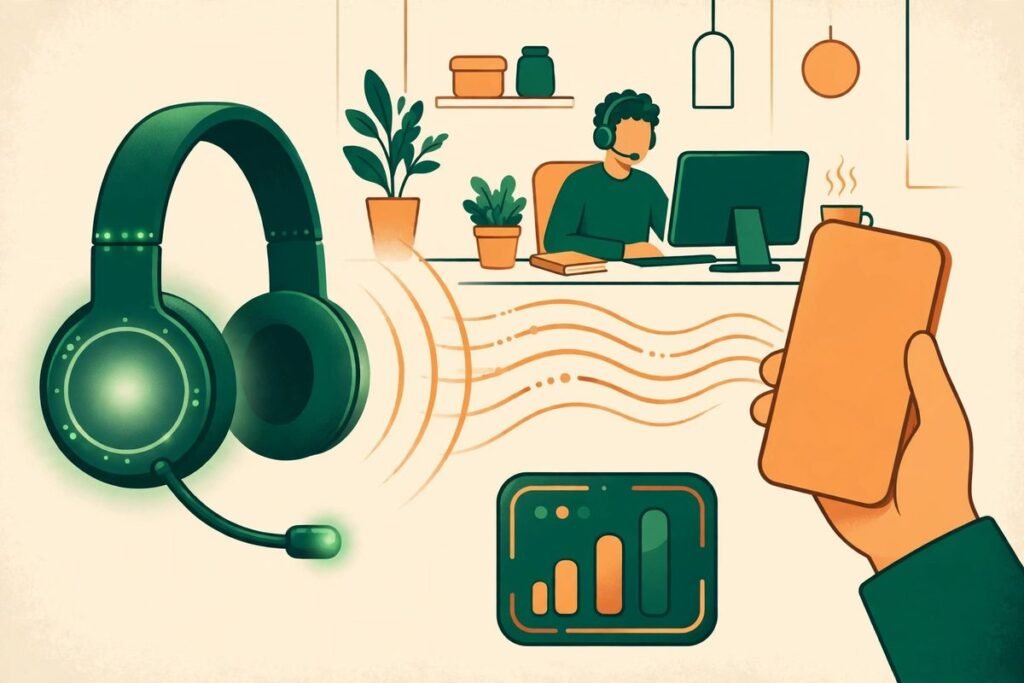
Insight7 voice AI agents customer calls are the newest pitch from a platform that started life analysing customer interviews and has since rebuilt itself as an AI call centre. The idea is simple enough to explain in one sentence: instead of hiring more agents to phone customers, you set up an AI voice agent that makes the calls, holds the conversation, and writes the outcome back to your CRM. The verdict, up front, is that Insight7 is a genuinely strong choice for mid-market teams that want AI agents and human agents on the same platform — but the voice-calling side is still in beta, its pricing is not published, and it is not the right buy if you only want a cheap outbound dialler. This review covers what the product does, what it costs, and where it falls short, using figures from Insight7’s own pages and its Product Hunt listing.
If you are a business owner weighing up whether an AI voice agent belongs on your phone lines at all, this is written for you. By the end you will know exactly what Insight7’s voice agents can and cannot do, what the whole platform costs, and how it compares with the specialist voice-agent tools it competes against. We have also listed it in our AI Tools Directory, where you can compare it with other AI tools we have reviewed.
What Insight7 actually is
Insight7 was founded in 2022 by Odun Odubanjo, a former Shopify product lead, and launched in 2023 as a tool for analysing interviews and focus groups. It has since pivoted hard towards customer-facing teams. Today it describes itself as an all-in-one AI platform for customer teams, and the product has four parts that matter: AI voice and chat agents that handle routine conversations, automated call scoring that grades every conversation against your own rubric, Live Assist that coaches human agents during live calls, and AI roleplays that train reps on scenarios built from your real calls.
That combination is the whole point of the product. Most voice-agent tools do one job: they make or answer calls. Insight7 wraps the agent in the quality and coaching layer that usually lives in a separate conversation-intelligence tool. Every call the AI makes, and every call your people take, is scored the same way, and the gaps the scoring finds become coaching automatically. It is used by more than 1,000 businesses, holds a 4.9 rating on Product Hunt from seven reviews, and is rated 4.7 on G2. Compliance is a genuine selling point for regulated teams: the platform is HIPAA compliant, SOC 2 Type II certified, and GDPR compliant, with PII and PHI redaction built in.
Insight7 voice AI agents customer calls: how the calls actually work
The voice agents are the feature behind the November 2026 Product Hunt launch, and they are worth understanding precisely, because the launch framing can make them sound more finished than they are. An outbound voice campaign is built by setting a goal, an audience, the AI caller, and the rules. Contacts come in by CSV upload or typed entry, and the agent calls them in natural speech, follows a script built on your policies and knowledge base, and records the outcome — yes or no answers and call results pulled from the transcript — back to your CRM.
The calls themselves cover the unglamorous work that eats small teams alive: reminding a customer that a renewal is 30 days out, chasing a failed premium payment, calling a lapsed customer back, giving a claim-status update, or running a post-claim satisfaction survey. For onboarding teams, the agents call within minutes of a drop-off event — an unfinished identity check, a signed-up account with no first deposit, a stalled setup — while the task is still fresh. Each finished call becomes a transcript a reviewer can read, and calls where only the AI spoke are not counted as reached, which is a small but honest detail: the reporting does not flatter itself.
Two things are important to know before you plan around this. First, the outbound voice campaigns are in beta and switched on per organisation, and inbound lines with caller lookup and a callback queue are still being finalised behind the beta flag. Second, Insight7 does not send texts, so if a campaign needs an SMS follow-up with a link, you connect a separate SMS tool. The agents speak English, Pidgin, Yoruba, Hausa, and Igbo, and the analysis layer transcribes in more than 60 languages — a deliberate focus on markets most voice-agent vendors ignore.
What else the platform does
The voice agents get the headlines, but the scoring and coaching layer is where most of the value sits for a team that already has people on the phones. Here is what the rest of the platform does, in practice:
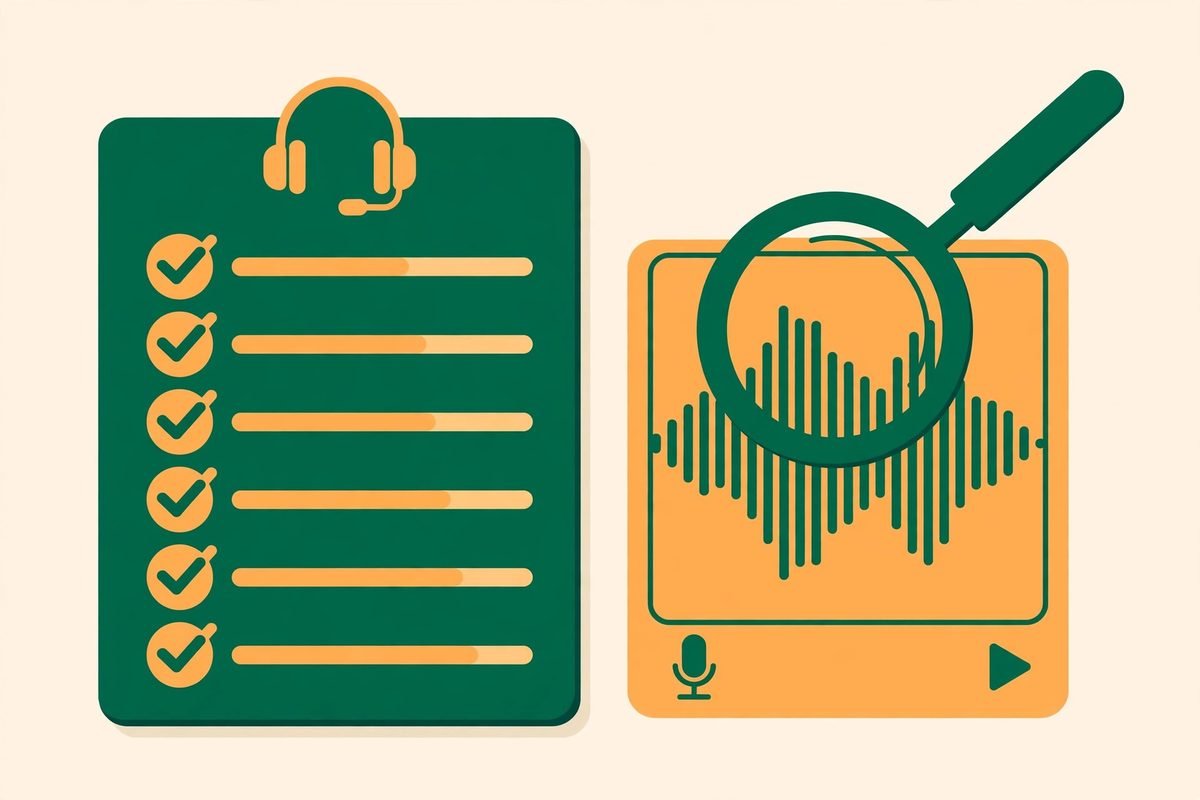
- AI Call Scoring: every call, email, and chat is scored against a weighted scorecard your team owns, not a sample. Manual QA typically covers under 5% of customer conversations, according to McKinsey research cited by Insight7, so the jump from sampling to full coverage is the single biggest change for most teams.
- Live Assist: during a live call, the agent sees the next step from a playbook the manager sets, so the customer never has to repeat themselves when a call is handed over.
- AI Roleplays: practice scenarios are built from your real calls, with personas that push back, change tone, and ask follow-ups, then scored against the same rubric as live calls.
- AI Coaching: when QA flags a specific behavioural gap, the platform assigns a roleplay targeting that exact moment, automatically.
- Workflow automation: agents can book appointments, take payments, and update your CRM as part of the call, rather than just talking.
- Test and govern: go-live is gated on an accuracy bar you set, and every AI and human call is scored after launch.
For a small business, the honest read is that this is a mid-market platform with a small-business on-ramp. The free plan lets you test scoring on a handful of real calls before spending anything, which is the right way to evaluate a tool like this.
Insight7 pricing: the verified tiers
Insight7 publishes its analysis plans outright, which is rarer than it should be in this market — several competitors share pricing only after a demo. The figures below come from the company’s own pricing pages and comparison guides, and you should still confirm them on the day you buy, because AI vendors change prices often.
- Free — $0 a month: 1 user, 3 call or transcript analyses a month, 1 project, English only. Enough to see how the scoring works, not enough to run ongoing QA.
- Pro — $99 a month, or $83 a month billed annually: 1 user, 50 analyses a month, 4 projects, scorecards and evaluation templates, 60+ languages, basic dashboards.
- Business — $299 a month, or $250 a month billed annually: 3 users, 200 analyses a month, keyword and scorecard alerts, PII and PHI redaction, AI roleplay.
- Plus — $1,499 a month: 20 users, 2,500 analyses a month, full AI coaching and feedback. At that volume the cost works out to about $0.60 per analysed call.
- Enterprise — custom: unlimited volume and bespoke terms, priced on request.
The gap in that table is the voice agents themselves. Insight7’s own comparison pages describe agent pricing as “on request”, and the setup is handled by the Insight7 team on your scripts, policies, and knowledge base, with a first use case going live in about two weeks. That managed setup is a genuine advantage for a team with no voice engineer — but it also means you cannot cost the voice-agent side from the website. Treat the published tiers as the price of the analysis and coaching platform, and get a written quote for the agents before you budget. For context, usage-priced rivals charge very differently: Retell AI, for example, prices from $0.07 to $0.31 a minute, so a high-volume outbound operation should model both pricing shapes against its real call minutes before choosing.
Who Insight7 is for
Insight7 fits best in a fairly specific slot: a team of roughly 20 to 300 agent seats that runs AI agents and human agents together and wants one platform to score, guide, and train both. That is the company’s own framing, and it holds up. If your team already records calls through Zoom, Teams, or a contact-centre tool, Insight7 sits on top of what you have — it is not a phone system — and turns those recordings into QA scores, coaching, and compliance flags.
It is a strong fit for sales, customer success, and support teams that need to prove quality across every conversation, for regulated businesses that need redaction and audit trails, and for operations teams running outbound campaigns like renewals, win-backs, and onboarding nudges where the call follows a clear drop-off event. The multilingual coverage also makes it a serious option for teams serving West African markets, where Yoruba, Hausa, Igbo, and Pidgin support is genuinely unusual.
It is not the right tool if you only want a cheap outbound dialler, if you need a full phone system, or if you run a 500-plus-seat enterprise contact centre with dedicated RevOps — Insight7’s own comparisons concede that last point. It is also the wrong buy if nobody on your team will own the scorecard: the platform’s value depends on defining what “good” looks like for each call type, and a team that never configures its rubrics will get generic scores out of an expensive tool.
Watch-outs and honest limitations
Every tool in this category has sharp edges, and a review that hides them is not useful. Here are the ones that matter for Insight7:
- Voice campaigns are beta. Outbound campaigns are switched on per organisation, and inbound caller lookup is still being finalised. Do not plan a launch date around a beta feature without a written commitment from the vendor.
- Voice-agent pricing is not published. You cannot build a business case from the website alone. Get the quote in writing, including per-minute or per-call costs, before you sign.
- No SMS in campaigns. If your follow-up flow needs a text with a link, budget for a separate SMS tool.
- Small review base. A 4.9 on Product Hunt sounds definitive, but it is seven reviews, and the G2 score of 4.7 comes from a similarly small pool. Treat the scores as encouraging, not conclusive.
- Legal exposure is yours, not the vendor’s. In the US, the FCC’s 2024 ruling means AI-voice calls need consent under the TCPA. In the EU, Article 50 of the AI Act has applied since 2 August 2026 and requires AI that talks to people to say it is AI from the first interaction. Insight7’s beta spec includes consent marking, calling hours, retry rules, and a do-not-call list — confirm each one is switched on in your account, and get your own legal advice for the regions you call.
- Customers still want a human exit. Gartner found that 87% of 3,566 customers say a company using generative AI for service must offer a route to a human. Every script should open with an AI disclosure and offer a person at any time, and the handover must carry context so the customer never repeats themselves.

How Insight7 compares to the alternatives
The voice-agent market splits into two camps, and Insight7 sits deliberately between them. On one side are the developer-led builders — Retell AI, Vapi, and Bland AI — which give you an API and a per-minute price and expect you to build and govern the agent yourself. On the other are the no-code outbound specialists like Synthflow, which ship templates and a visual flow designer. Insight7’s pitch is that it does the building for you and then scores every call the agent makes, which neither camp does out of the box.
The trade-off is control and price transparency. Retell AI from $0.07 a minute is cheaper to experiment with and easier to cost, and its API fits teams with a technical owner. Synthflow’s templates get a high-volume phone operation running fast. PolyAI suits high-volume inbound service. What none of those give you is the QA, coaching, and roleplay layer on the same platform — if you buy a builder, you will still need a separate conversation-intelligence tool to score the calls, and you will pay for two products and maintain two integrations. For a mid-market team, that single-platform argument is Insight7’s strongest card. For a developer-led team that only wants an agent and already has QA covered, it is a reason to look elsewhere.
From our experience
We have built AI automation for businesses for more than nine years, across over 300 projects, and the pattern with voice agents is consistent: the technology is rarely the hard part. The hard part is the operating discipline around it. Teams that succeed with AI calling start with one narrow use case — a renewal reminder, a failed-payment chase, a win-back call — measure the outcome for a month, and only then expand. Teams that fail buy the agent, point it at their whole call list, and discover that a badly governed agent damages trust faster than a bad human agent ever could, because it scales the mistake.
Three practical lessons apply directly to Insight7. First, budget the setup honestly: the vendor sets up the first agent in about two weeks, but your side still has to supply scripts, policies, and a knowledge base, and that work is usually underestimated. Second, define your scorecard before you go live, not after — the accuracy bar that gates launch is only as good as the rubric you write. Third, treat the beta status seriously: run the voice agent on a small, consented segment first, read every transcript for the first two weeks, and keep a human in the loop for anything involving money, health, or a complaint. If you want help wiring an AI voice agent into your CRM and support workflows, our AI integration team builds exactly these pipelines, and our n8n workflow automation service covers the triggers, notifications, and CRM write-back around the calls.
Frequently asked questions
What are Insight7 voice AI agents?
They are AI voice agents that make outbound customer calls — renewals, payment chases, win-backs, onboarding nudges, and surveys — in natural speech, following scripts built on your policies and knowledge base. Each call is transcribed, scored against your rubric, and written back to your CRM. Outbound campaigns are currently in beta.
How much does Insight7 cost?
The analysis platform is free for 3 analyses a month, then $99 a month for Pro, $299 a month for Business, and $1,499 a month for Plus, with annual billing discounts on Pro and Business. Voice-agent pricing is not published and is quoted on request, so get a written quote before budgeting.
Can Insight7 voice agents replace human agents?
No, and it is not designed to. The agents handle routine, scripted calls; complex, emotional, or high-stakes conversations still need a person. The platform’s own design assumes both: AI agents take the routine work, Live Assist guides humans during live calls, and every call hands over with context. Most customers also expect a route to a human.
Is it legal for an AI voice agent to call customers?
It depends on where you call and whether you have consent. In the US, AI-voice calls need consent under the TCPA following the FCC’s 2024 ruling. In the EU, the AI Act requires the AI to disclose itself from the first interaction. Insight7 supports consent marking, calling hours, retry rules, and do-not-call lists, but legal compliance is your responsibility — get advice for each region you call.
Who should not buy Insight7?
Teams that only want a cheap outbound dialler, teams that need a full phone system, and very large enterprise contact centres with dedicated RevOps should look elsewhere. It is also a poor fit if nobody on your team will own the scoring rubrics, because the platform’s value depends on them.
Insight7 is a serious, well-built platform whose strongest idea is combining the voice agent with the quality and coaching layer most vendors sell separately. The scoring, Live Assist, and roleplay features are proven and transparently priced. The voice-calling side is newer, still in beta, and priced on request — worth piloting on a small, consented segment, not worth betting a whole phone operation on yet. If that pilot fits your team, start with the free plan, score a handful of real calls, and let the transcripts decide. If you want help designing the pilot or connecting it to your CRM, talk to us — we build these workflows for clients every week.