
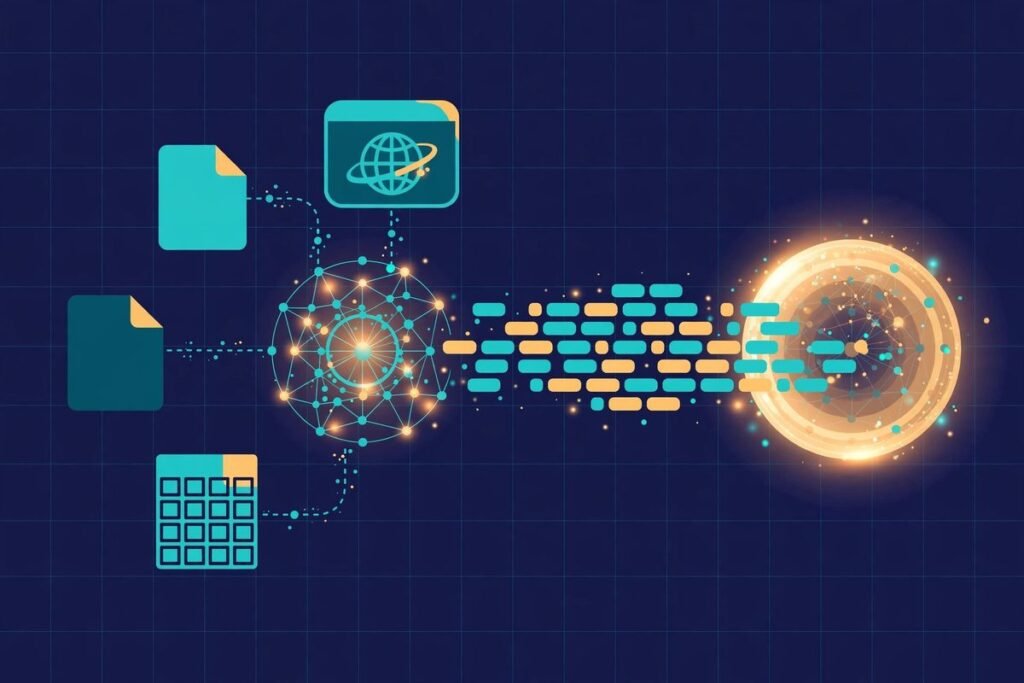
A RAGFlow RAG engine for business documents is the closest thing the open-source world has to a turnkey answer engine for your company’s own files. RAGFlow, the 93,843-star project from Infiniflow, takes the PDFs, Word documents, spreadsheets and scanned contracts sitting in your shared drives and turns them into a system your team can ask questions of — with answers that cite the exact passage they came from. Version 1.0.0 landed on 6 November 2026, and it marks a deliberate pivot: RAGFlow no longer describes itself as just a RAG engine, but as an “agent-native database” and context infrastructure for AI agents. This deep-dive explains what that means in practice, how to run it, and where it will disappoint you — because a tool this powerful has sharp edges, and you should know them before you commit.
This article is for business owners, operations leads and developers deciding whether to ground an AI assistant in their own documents. By the end you will know what RAGFlow does, what it costs to run, how it compares to a simple vector database, and the exact steps to get a pilot running on your own server in an afternoon.
RAGFlow RAG Engine for Business Documents: What It Actually Is
RAGFlow is an open-source Retrieval-Augmented Generation (RAG) engine that fuses retrieval with agent capabilities to build what its maintainers call a superior context layer for large language models. The idea is simple and, for most businesses, exactly right: a language model is only as useful as the information it can reach. Left to its own training data, it guesses. Pointed at your documents, it answers from evidence.
What separates RAGFlow from the dozens of RAG demos on GitHub is that it is built as a complete product, not a notebook. It ships a web interface for uploading and managing document collections (called knowledge bases), a visual agent builder for chaining retrieval and generation steps, an API for integrating answers into your own software, and a hosted cloud option at cloud.ragflow.io for teams that would rather not run infrastructure. The project started in December 2023, is licensed under Apache 2.0, and as of today carries 93,843 stars and 11,272 forks — numbers that put it among the most-starred AI infrastructure projects on GitHub.
The 1.0.0 release reframes the project. Where earlier versions sold themselves as a RAG engine, the current positioning is “context infrastructure”: the layer that sits between your messy, unstructured business data and the agents that need to reason over it. That matters because the bottleneck in business AI has shifted. Model quality is no longer the constraint — getting the right context into the model, in the right form, at the right time, is.
What RAGFlow Can Do
RAGFlow’s feature list is long, but five capabilities do the heavy lifting for business users.
- Deep document understanding. RAGFlow parses Word documents, PowerPoint decks, Excel spreadsheets, plain text, images, PDFs and scanned copies, plus structured data and web pages. Its DeepDoc component handles layout analysis, OCR and table recognition — the unglamorous work that decides whether a RAG system actually works on real business files, where the answer often lives inside a table on page 47 of a scanned PDF.
- Template-based chunking. Documents are split into retrievable chunks using configurable templates, and the chunking is visualised so a human can inspect and intervene. This is the feature most RAG tutorials skip and most production failures trace back to: if the chunk boundaries are wrong, retrieval returns the wrong context and the model answers confidently from the wrong passage.
- Knowledge Compilation. Added in August 2026, this compiles documents and datasets into structured knowledge artefacts — wikis, knowledge graphs, trees, PageIndex, mind maps, timelines and agent skills. Instead of retrieving raw chunks every time, you can compile a document set into a form that is cheaper and faster to query.
- Agentic retrieval. For complex questions, RAGFlow performs multi-step retrieval: the model analyses the question, breaks it down when needed, retrieves knowledge, and verifies the evidence. You choose a thinking mode — Low, Medium, High or Ultra — to control how deep the retrieval and reasoning go, trading latency and cost against thoroughness.
- Grounded citations. Answers come with traceable references back to the source chunks. That single feature is what makes RAGFlow defensible inside a business: when the assistant says your return policy allows a 30-day window, someone can click through and see the policy paragraph it read.
Under the hood, RAGFlow supports configurable language models and embedding models, multiple recall strategies paired with fused re-ranking, and ingestion from a growing list of sources — including Google BigQuery and website sitemaps, both added in 2026. It exposes APIs for integration, so the same knowledge base can power a support chatbot, an internal search tool and an agent workflow at once.

How RAGFlow Works, Step by Step
Understanding the pipeline helps you judge where it will succeed and where it will struggle with your data. The flow has four stages.
- Ingest. You upload files or connect a data source — a folder of PDFs, a BigQuery table, a website sitemap. RAGFlow parses each document, extracting text, tables and layout structure.
- Chunk. The parsed document is split into chunks according to the template you chose for that file type. A legal contract gets different chunking than a product manual, and that choice matters more than most teams expect.
- Index. Each chunk is embedded into a vector representation and stored alongside its metadata, ready for retrieval. RAGFlow supports Elasticsearch or its own Infinity engine as the document store.
- Retrieve and generate. When a question arrives, RAGFlow retrieves the most relevant chunks — using multiple recall methods, then re-ranking the results — and passes them to the language model as context. The model answers from the retrieved evidence, and the answer carries citations back to the source.
The agentic layer sits on top of this. In agentic retrieval mode, the system can decompose a hard question into sub-questions, run several retrieval rounds, and check the evidence before answering. That is slower and more expensive per question than single-pass retrieval, which is why the thinking modes exist: a simple factual lookup does not need Ultra mode, and a multi-document synthesis question should not be answered in Low mode.
Why RAGFlow Is Trending Right Now
Three forces explain the project’s momentum. First, the 1.0.0 release on 6 November 2026 is genuinely significant: it is the first stable major version, and it arrives with the agent-native repositioning, Knowledge Compilation and agentic retrieval modes all in place. Teams that evaluated RAGFlow a year ago and found it promising but rough will find a different product today.
Second, the problem it solves has become the central problem in business AI. Every company we speak to has the same gap: the model is clever, but it does not know anything about their business. Their contracts, procedures, price lists and support history live in documents the model has never seen. RAG is the standard answer to that gap, and RAGFlow is the most complete open-source implementation of it — a full product with a UI, APIs and agents, rather than a framework that expects you to build the product yourself.
Third, the economics have shifted in its favour. Running a capable open model or a mid-tier commercial API behind a RAG layer is now cheap enough that a small business can ground an assistant in its own documents for the cost of a modest server and an API bill measured in tens of dollars a month. The expensive part was never the model; it was building the pipeline. RAGFlow removes most of that build cost.
From Our Experience: Where RAGFlow Shines and Where It Bites
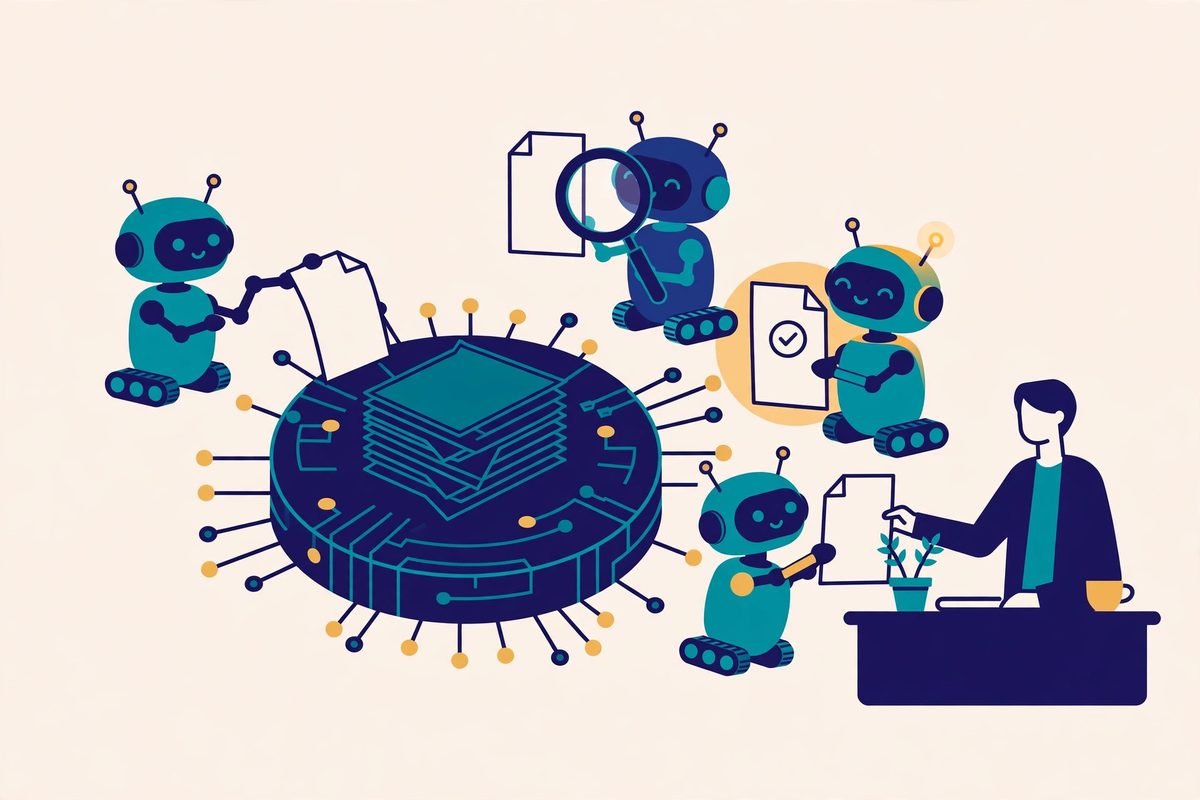
We have built retrieval-grounded assistants for clients, and the pattern is consistent: the technology works, and the failures are almost always about data and expectations, not the engine. RAGFlow is honest about that in its design — the visualised chunking and the citations exist precisely because retrieval quality is something you have to inspect, not assume.
Where it shines. Internal knowledge bases are the sweet spot: support teams answering from policy documents, sales teams pulling accurate product and pricing detail, operations teams querying SOPs. The citation trail makes it auditable, which matters the moment an AI answer influences a customer commitment. The agent builder is also genuinely useful for multi-step tasks — a question that needs a policy lookup plus a price-table lookup plus a summary, for example — without writing orchestration code.
Where it bites. Start with the resource floor: the project recommends 4 CPU cores, 16 GB of RAM and 50 GB of disk just to start, and local models push that higher. This is not a tool you run on a spare laptop and forget about. Second, the codebase has moved fast — the 1.0 release is a Go-based rewrite of services that were historically Python, and building from source now requires Go 1.27, Clang 20 and a native-dependency download step. Docker is the sane deployment path for almost everyone; source builds are for contributors. Third, macOS is not currently supported for the Docker deployment, so Mac-based teams need a Linux server or the hosted cloud. And with 1,344 open issues at the time of writing, you should expect rough edges and budget time for upgrades — this is a fast-moving project, not a finished appliance.
The honest rule of thumb: if your documents are mostly clean digital files and your questions are factual lookups, RAGFlow will feel like magic within a day. If your documents are thousands of badly scanned PDFs with handwritten annotations, expect a week of chunking and parsing tuning before the answers are trustworthy. That is true of every RAG system; RAGFlow at least gives you the tools to see the problem.
If you are weighing a grounded assistant for your business, our earlier guide to RAG chatbots and AI answers grounded in your business documents covers the build-versus-buy decision in more depth, and our AI integration services cover the implementation side when you want a team that has shipped this before.
A Responsible-Use Note Before You Upload Your Documents
RAGFlow is a powerful tool for working with your own documents, and that power carries two obligations worth stating plainly. First, only index documents you have the right to use: contracts, HR files and customer data should be ingested with the same access controls you apply to the files themselves, not dumped into a shared knowledge base because it is convenient. Second, remember that anything you upload becomes retrievable context for the model — so keep personally identifiable information and credentials out of the knowledge base, use the access controls on datasets and agents, and check your model provider’s data policy before sending document content to a third-party API. Self-hosting RAGFlow does not automatically mean your data stays private; the LLM and embedding calls may still leave your server. Choose providers with data-processing terms you have actually read.
Getting Started With RAGFlow
The fastest path to a working pilot is Docker. Budget an afternoon, including the time to upload a real document set and test real questions against it.
- Prepare the host. Use a Linux server with at least 4 CPU cores, 16 GB of RAM and 50 GB of free disk. Install Docker 24.0.0 or newer and Docker Compose v2.26.1 or newer. If you use Elasticsearch as the document engine, set
vm.max_map_countto at least 262144 withsudo sysctl -w vm.max_map_count=262144. - Clone the repository and check out the release. Run
git clone https://github.com/infiniflow/ragflow.git, thencd ragflow/dockerandgit checkout v1.0.0. - Start the services. Run
docker compose -f docker-compose.yml up -d. The entrypoint runs database migrations, then starts the Admin, Syncer, Ingestor and API services. - Verify it is healthy. Check
docker psuntil the dependencies show healthy, then confirm the API withcurl -f http://localhost/api/v1/system/healthzand expect an HTTP 200. - Open the web UI and add your models. Sign in at your server’s address, then on the model provider page add your LLM, embedding model and reranker — model name, service address and API key for each.
- Build your first knowledge base. Upload a small, representative set of documents — ten to twenty files you know well — choose a chunking template, and let the ingestion finish.
- Test with questions you already know the answers to. Ask twenty questions whose answers you can verify, check the citations, and adjust chunking or the thinking mode where answers go wrong. Only then expand to the full document set.
If you would rather skip the infrastructure entirely, the hosted cloud at cloud.ragflow.io offers the same product without the server work — a reasonable trade when the pilot is about proving value rather than proving you can run Docker. Either way, the discipline is the same: start small, verify against known answers, and expand only when the citations hold up.
Frequently Asked Questions
Is RAGFlow free to use?
Yes, for self-hosting. RAGFlow is released under the Apache 2.0 licence, so you can run it on your own server at no licence cost. You still pay for the server and for whatever language and embedding models you connect — whether that is a commercial API bill or the hardware for local models. A hosted cloud version is available for teams that prefer not to manage infrastructure.
What documents can RAGFlow handle?
Word documents, PowerPoint presentations, Excel spreadsheets, plain text files, images, PDFs and scanned copies, plus structured data and web pages. It also ingests from Google BigQuery and website sitemaps. Scanned and image-based documents go through OCR and layout analysis, though heavily degraded scans will need more tuning than clean digital files.
How is RAGFlow different from a simple vector database?
A vector database stores embeddings and returns similar chunks; that is one component of what RAGFlow does. RAGFlow adds document parsing and layout understanding, template-based chunking you can inspect, multi-recall retrieval with fused re-ranking, agentic multi-step retrieval with thinking modes, knowledge compilation into wikis and graphs, a web UI, an agent builder and APIs. In short, a vector database is a building block; RAGFlow is the finished system built on top of it.
What hardware does self-hosting RAGFlow need?
The project’s recommended starting configuration is 4 CPU cores, 16 GB of RAM and 50 GB of disk, with Docker 24.0.0 or newer. Real requirements depend on document volume, parsing load and concurrency, and running local models needs more. If you use Elasticsearch, the host needs vm.max_map_count set to at least 262144.
Can RAGFlow work with the language model my team already uses?
Yes. RAGFlow lets you configure the language model, embedding model and reranker independently on the model provider page, so you can point it at the commercial or open model your team already uses. That flexibility is one of its practical strengths: you are not locked into a single vendor’s model to get a grounded assistant.
RAGFlow earns its 93,843 stars by solving the problem businesses actually have: not a smarter model, but a model that knows what your business knows. If your team spends its days hunting through documents for answers that already exist, a grounded assistant is one of the highest-return AI projects you can run — and RAGFlow is currently the most complete open-source way to build one. Start with a small pilot, verify the citations, and let the results decide. And if you would like help scoping that pilot, or building the assistant into your existing systems, talk to MTD Technologies — we have shipped retrieval-grounded systems for clients across nine years and 300+ projects, and we can tell you quickly whether RAGFlow fits your documents. You can also browse our AI Tools Directory for other tools we have reviewed in this series.