

Velozity is a multiplayer AI office platform that puts your people and their AI agents in one shared workspace — chat, calls, tasks, calendar, files, and every agent, all working side by side. It launched on Product Hunt in October 2026, landing near the top of the weekly leaderboard with a launch led by founders Ishu Darshan and Akash Mandal. Our verdict up front: of all the “AI workspace” launches reviewed this year, Velozity is the first one to treat the team, not the individual, as the unit of AI work. That is a genuinely new idea — and it arrives with the rough edges you would expect from a product that is only weeks old.
At MTD’s AI Tools Directory, we have reviewed dozens of AI tools that bolt an agent onto a chat window. Velozity is different: it asks what happens when the agent sits inside the office, not inside someone’s private tab. This review walks through what it does, what it costs, who it suits, and where we would hesitate — drawing on the launch material, the makers’ own forum posts, and our experience shipping AI products for real businesses.
What this multiplayer AI office platform actually does
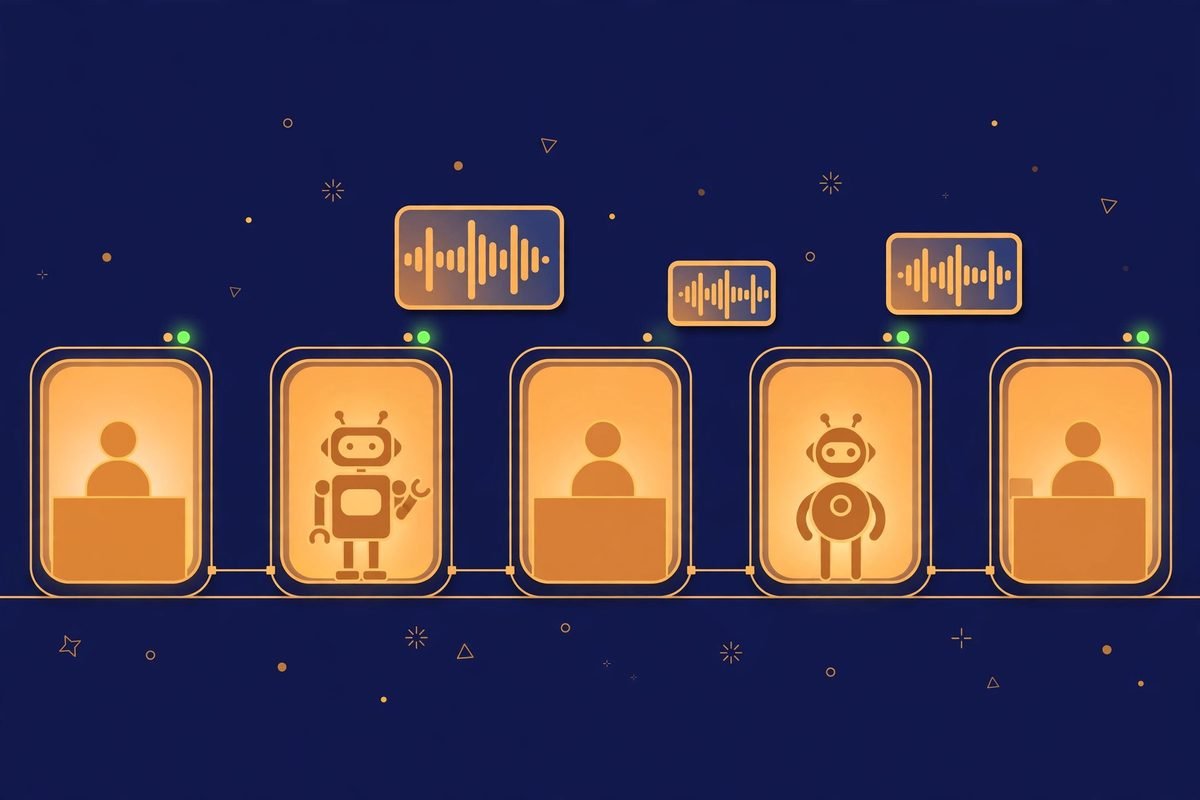
The premise is simple to state and hard to build: one workspace where human collaboration and AI agents share the same context. Velozity’s building blocks are Spaces (shared conversations you can create, invite people to, and administer), Workspaces with “cabins” you walk into to talk to a teammate or an agent, and a unified home screen that pulls your spaces, agents, tasks, and call transcriptions together. Tag an agent with @ to bring it into a conversation, reply in threads, react, send voice notes — the familiar messaging grammar, extended to agents.
Under the hood, the agents run on the AI subscriptions you already pay for — Claude Code, Codex, Gemini CLI, Cursor CLI, Kimi Code, and OpenCode are all named on the official site. Your whole team can tag their own agents in the same conversation, and every agent shares the team’s context, so work moves between people and agents without anyone re-explaining. For teams that already pay for multiple AI subscriptions, this is the headline: the makers promise “no second AI bill”, because the platform rides on plans you own rather than charging you again per agent.

What it does: the feature set in plain English
Working through the launch page and the Product Hunt launch thread, the feature set breaks down into five layers:
- Shared spaces and presence. Live presence, video and audio calls with transcripts, tasks, calendar, notes, and files — the whole working day in one interface. The launch film shows the signature moment: you “walk into a cabin” in a Workspace, or talk to your agents in AI Space, and the calls, tasks, transcripts, and notes stay in the same window.
- Agents you can summon. Mention an agent with @ to bring it into a conversation, watch it work step by step as it happens, and get notified when it answers. There is also a built-in agent, “Speed”, which the makers describe as your day-one teammate that reads your emails, transcripts, and files, captures tasks from them, does deep research on your own data, and delivers a morning brief.
- Routines. Create, edit, and schedule recurring agent work, and see what each run produced — the automation layer for work that repeats.
- A company brain. Ask questions against your own data. The launch demo shows an agent answering “where did we land on Acme’s pricing?” by checking calls and documents and citing the specific call and document it used — answers with receipts, not hallucinations.
- 100+ integrations and a cloud computer. Agents take on real work across Slack, Gmail, GitHub, Linear, HubSpot, and Jira among others, and for anything without an integration they drive a cloud computer — so the work keeps going while your laptop is closed. Guests get a “guest pass”: they open the link, wait at Reception, and you let them in.
The pricing story: bring your own AI subscription
Here is what we could verify from primary sources: Velozity is free to start, with no card required, and its agents run on AI plans you already pay for — the makers name Claude Code, Codex, Gemini CLI, Cursor CLI, Kimi Code, and OpenCode explicitly, and the built-in agent Speed needs no outside subscription at all. The iOS app (provider: Growhut Technologies Private Limited) requires iOS 18 or later.
What we could not verify is the paid tier structure. No public pricing page with per-seat costs, cloud-compute hour limits, or plan names was available at review time. That is normal for a launch-week product, but it means you should go in with eyes open: ask what “cloud hours” cost when your agents run long jobs, and what happens when your plan’s cloud hours run out — the app changelog itself mentions clearer notices for exactly that case. If you evaluate Velozity, get the unit economics in writing before you build workflows on top of it.
Who it is for (and who should wait)
Velozity names its audience plainly: startups, and teams in development, product, sales, and operations — plus solo users juggling several AIs. From a practitioner standpoint, the fit we see is clearest for:
- Remote-first startups (5–50 people) already paying for Claude or ChatGPT subscriptions and living in Slack/Zoom/Notion. The promise of consolidating chat, meetings, tasks, and agent work in one place — one user claims $214 saved per user per month by consolidating tools — is aimed squarely at this crowd.
- Founder-operators covering multiple roles at once: one person running deep research with a few agents, or a founder who wants complete visibility into what the team and its agents are doing without micromanaging.
- Dev teams running coding agents who already use Claude Code or Codex and want that work visible to the whole team instead of trapped in one person’s terminal. (See also our review of Viktor.com, the AI coworker for Slack teams, for a different take on the same problem.)
Who should wait: regulated industries with strict data-residency and audit requirements (ask hard questions about where agent sessions and transcripts live), large enterprises with entrenched Microsoft or Google contracts (the switching cost is the whole collaboration stack, not just a tool), and anyone who needs guaranteed uptime SLAs — a weeks-old platform cannot offer them yet.
Honest watch-outs
Every review we publish lists the limitations we would want to know before buying. For Velozity:
- Trust model is the product. The makers are refreshingly open about this: their pre-launch forum posts asked “would you let a teammate’s AI act inside your team’s apps without asking first?” The answer they are building toward is human approval for anything that leaves the workspace, rather than approving every step. That is the right design — but it means the platform’s permission and audit model is load-bearing. Until it has been battle-tested, treat it like a beta trust boundary.
- Context sharing is a double-edged sword. Every agent sharing the team’s context is exactly what makes the product work — and exactly what makes a misconfigured permission painful. An agent with access to “everything the team knows” will occasionally act on information a human would have known to keep in the room.
- Migration is the real price. “Replaces Slack, Zoom, Notion, Calendly” is a compelling pitch, but replacing them means migrating years of history, habits, and integrations. The 100+ integrations soften this; the social migration does not.
- Young platform, unproven at scale. Launch-week products break in interesting ways under real load. Run it on a real project for a month before committing your team.
How it compares to the alternatives
Nobody buys in a vacuum. The honest comparison set:
- Slack/Teams + Copilot/Claude integrations: the incumbent you already pay for. Better at compliance, worse at agents — agents remain add-ons, not citizens, and context stays fragmented across threads.
- Notion AI / Coda: strong on documents and wikis, but the agent story is document-centric, not team-centric. Velozity’s bet is that work happens in conversation and presence, not in pages.
- Standalone agent platforms (Replit Agent, Devin-class tools): deeper individual-agent capability, zero team context. Velozity is arguably solving the complementary problem: not smarter agents, but agents that share a world.
- Viktor.com and the Slack-native AI coworkers: lighter lift — the coworker comes to your existing chat. Less powerful shared context, much easier adoption. If Velozity feels like too much change, start there.
From our experience: the hard part is not the tool, it is the trust model
We have shipped AI features into production products for nearly a decade, and the pattern we keep seeing is this: the technology is rarely the blocker — the approval boundary is. Teams love the demo of an autonomous agent; they freeze at the first time it sends something without being asked. Velozity’s design instinct here is the most mature thing about the launch: “nothing is sent, paid, or signed without you.” A person approves what leaves the workspace, not every step inside it. That is the only approval model we have seen that does not grind agent workflows to a halt while still giving a human the veto that matters.
The second insight from the makers’ own writing: “Everyone’s AI is fast. Almost nobody’s team is.” We have watched exactly this failure mode in client teams — someone prompts an AI, copies the answer into chat, explains the context, waits for feedback, then prompts again. The AI was never the bottleneck; agreement was. If your team recognises that loop, a shared agent workspace is worth a serious trial. If your team’s bottleneck is somewhere else — unclear ownership, bad requirements, no shipping cadence — no AI office will fix it, and buying one will just give you a fancier place to be slow.
Frequently asked questions
What is Velozity?
Velozity is a multiplayer AI office platform launched in October 2026: a shared workspace where people and AI agents work side by side, with chat, calls, tasks, calendar, files, and agents all in one place. You can visit it at getvelozity.com, and it is free to start with no card required.
How is a multiplayer AI office different from Slack with an AI bot?
In Slack, an AI bot is a guest in your chat. In Velozity, agents are members of the office: they share the team’s context, can be @-mentioned by anyone in a Space, hand work to each other, and their output lands where the whole team can see it. The difference is shared persistent context versus per-thread bot calls.
Do I need to pay for AI subscriptions on top of Velozity?
No — that is the core pricing idea. Velozity’s agents run on AI plans you already pay for (Claude Code, Codex, Gemini CLI, Cursor CLI, Kimi Code, OpenCode), and the built-in agent Speed needs no outside subscription at all. The makers describe this as “no second AI bill”. Paid tier details were not public at review time, so confirm cloud-compute costs before committing.
Can agents act without a human approving?
Inside the workspace, agents can work autonomously and hand tasks to each other. But nothing is sent, paid, or signed without a person: a human approves anything that leaves the workspace. This “approve the boundary, not every step” model is Velozity’s answer to the trust question.
Is Velozity worth trying for a small remote team?
If your team already pays for AI subscriptions and lives in three or four separate apps for chat, meetings, and tasks, a free trial is a sensible experiment — the consolidation story is real. Just run it as a trial on one real project for a month, verify the paid-tier economics, and check the permission model against your security needs before migrating your whole team.
Bottom line: Velozity is the most conceptually interesting AI workspace launch of the year — not because its agents are smarter, but because it finally asks the right question: what if your team and its AI agents simply worked in the same room? If that idea resonates with how your team actually operates, try it free and judge the execution yourself. And if you need help integrating AI agents into your own product or workflow, talk to our team — this is the kind of system we build every day.