

Agentmash open-source multiplayer AI coding agents are built for a problem most teams only notice once it bites: two developers, each running their own coding agent, working on the same repository at the same time. Agentmash, launched on Product Hunt on 31 October 2026, is a shared context layer that tells every agent which files a teammate’s agent is changing, so agents warn each other before an edit instead of producing a merge conflict afterwards. Verdict up front: this is a genuinely interesting answer to a real coordination problem, but it is a days-old product with vendor-published benchmarks and no independent track record yet, so treat it as a promising pilot, not a proven platform.

What Agentmash does
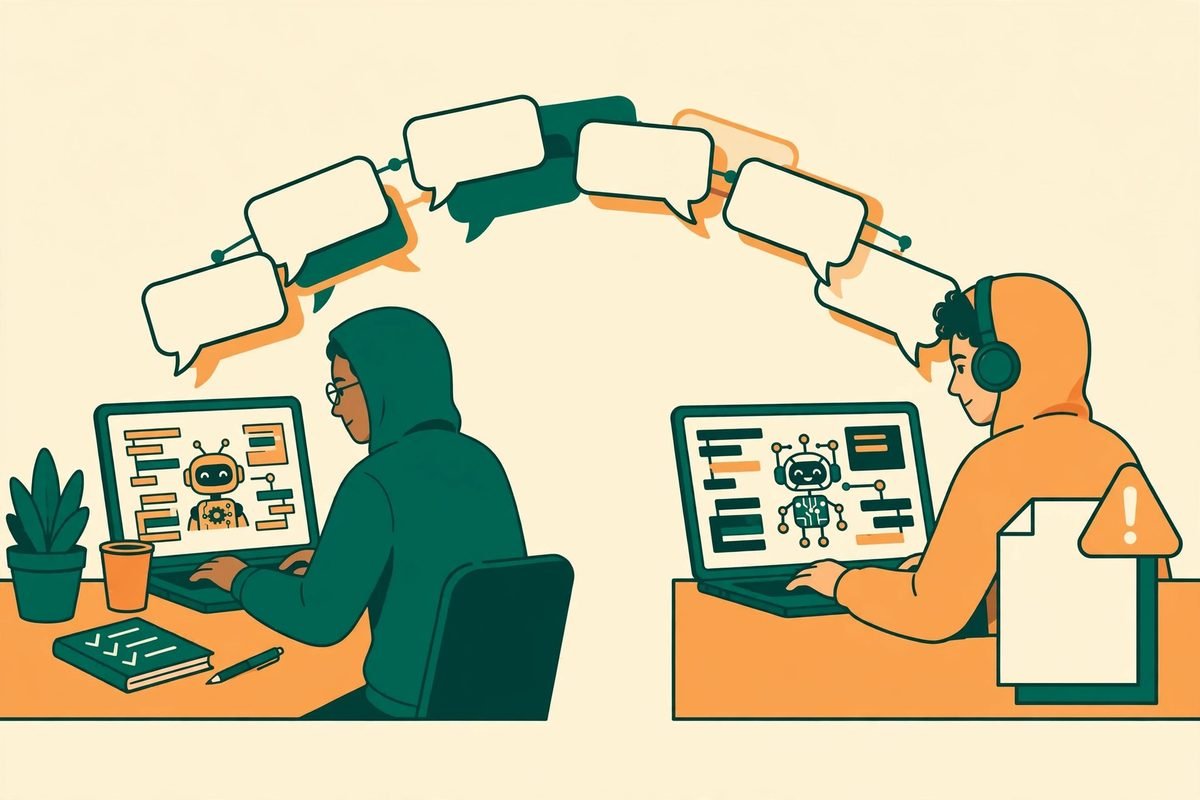
Agentmash is one app for a team’s AI coding agents. Each developer signs in with their own accounts for tools such as Claude Code, Codex, Cursor, GitHub Copilot or opencode, and the app shows who is online, which agent is running, and what each agent is doing. The core idea is simple: solo coding agents are blind to each other. Two agents can happily edit the same file, rename the same shared type, or change the same API contract, and nobody finds out until the merge. Agentmash puts a shared room between them.
Three features do most of the work. First, parallel-edit warnings: before an agent writes to a file, it is told that a teammate’s agent has uncommitted changes in that file, on which branch, and what task they are working on. In the maker’s own worked example, an agent about to add a CSV export button is warned that a teammate has uncommitted changes in the contacts list file, so it keeps its own edit additive instead of rewriting the file. Second, team chat with @mentions: you can message a teammate, your own agent, or a teammate’s agent much as you would in Slack, and recent messages reach every agent before its next prompt. Third, asking a teammate’s agent: you can send a prompt to a colleague’s agent, but nothing runs until that colleague approves it, it runs on their machine under their account, and they can narrow what it is allowed to do, including read-only requests.
Agentmash also ships a set of ready-made Claude Code agents, each with one job, covering planning, scouting the codebase, testing end to end, reviewing before merge, cleaning up code, updating dependencies, keeping CI green, writing docs, building interfaces and backends, and more. The shared context, not the agent roster, is the core product.
Why teams need shared agent context
When one developer used one assistant, coordination was a human problem solved by branches, pull requests and code review. When five developers each run an agent that can make dozens of edits in an hour, coordination becomes a machine-speed problem. Git still catches textual conflicts at merge time, but it cannot warn an agent mid-task that a colleague’s uncommitted work changes the contract it is about to use. That gap is where the expensive failures live: a renamed export, a changed function signature, a quietly altered API response shape, all discovered after two pieces of work are finished rather than while either could still adjust cheaply.
How the privacy model works
According to the official site, your code stays on your machine by default. What the shared room sees is metadata: file paths, branch names, how many lines changed, the names a change touches, the first 500 characters of a prompt, your name and the time, and commit subjects. That is a sensible split. The room needs enough information to warn an agent that a shared contract changed, but it does not need your source code to do that.
Two caveats still apply. First, metadata can still leak intent: file paths, branch names and prompt beginnings can reveal what a team is building, so a business handling sensitive client work should read the actual data-handling terms before connecting private repositories, not just the marketing summary. Second, the approval gate on asking a teammate’s agent is genuinely good design: nothing runs on someone else’s machine without their approval, and they answer tool requests themselves. That is the right default for a tool that crosses the boundary between colleagues’ machines, and any team adopting it should keep that gate switched on rather than trading it away for convenience.
Agentmash pricing: free, Team and Enterprise
Pricing is refreshingly simple, and it is charged per developer, never per agent. The free tier costs 0 and covers up to two developers, one private repository, unlimited public repositories, and seven days of history. That is enough for a genuine two-person trial on a real project, which is exactly how a tool like this should be evaluated.
- Free: 0 for up to 2 developers, 1 private repository, unlimited public repositories, 7 days of history.
- Team: 16 per developer per month, billed annually at 192 per year, with unlimited private and public repositories and up to 90 days of history.
- Enterprise: from 15,000 per year on an annual contract, including self-hosting and a private Docker image.
Who Agentmash is for, and who should wait
Agentmash fits teams where several developers run coding agents against one shared repository at the same time, especially product teams, agencies shipping client work in parallel streams, and any team that has already felt the pain of agent-caused merge conflicts. It also fits teams mixing agent tools: one developer on Claude Code, another on Codex or Cursor, all in the same room, is precisely the mixed fleet the product is designed for.
It is a weaker fit for solo developers, who gain little from a multiplayer room, and for teams that rarely touch the same files in the same week, where ordinary branching discipline already works. It is also premature as a mandated standard for a whole engineering organisation: a product launched days ago, however promising, should be piloted by one team first, with its conflict rate measured before and after, rather than imposed company-wide on launch-week marketing.
Watch-outs and honest limitations
The biggest watch-out is the evidence base. The official site publishes striking benchmark-style figures, including far fewer integration conflicts and lower cost per accepted task when Agentmash is used. Those are the vendor’s own measurements on its own tasks, not independent studies, and the site itself presents some figures as lower bounds. A prudent team treats them as a hypothesis to test on its own repository, counting textual conflicts, semantic conflicts and rework hours for a few weeks with and without the tool, rather than as promised savings.
The second limitation comes from the maker themselves, in a Product Hunt discussion reply, and it is refreshingly candid. The semantic matching that warns about changed shared contracts works at name level for JavaScript and TypeScript: it tracks which exported declarations an edit changed and what the other agent’s file imports, then matches by name. Other languages are matched by file only for now, it does not read signatures, and it does not run your compiler or tests, so the build on merged code remains the backstop. In plain terms: it catches the case where one agent changes a contract the other one uses, but not the case where two agents implement the same contract differently without touching a shared definition, or where the contract is not a name in code at all, such as a REST route and its JSON keys on two sides of the wire.
A third limitation is maturity. A launch-week product will have rough edges: agent integrations change, documentation lags, and support load is unknown. Teams should also confirm the open-source position for themselves before repeating it in procurement documents: the Product Hunt listing describes Agentmash as open-source, but the buying decision should rest on the repository, licence and self-hosting terms you can verify at the time, not on a launch listing.
How Agentmash compares to the alternatives
Compared with running solo agents and relying on Git alone, Agentmash adds the missing warning step: Git resolves conflicts after the fact, Agentmash tries to prevent the conflicting edit in the first place. That is a real difference, but it does not replace Git, code review or CI. The build, the tests and human review remain the final safety net, exactly as the maker acknowledges.
Compared with strict workflow rules, such as one developer per area, short-lived branches and mandatory small pull requests, Agentmash is less disruptive to how people already work, because it warns rather than forbids. The trade-off is that a warning an agent can work around is weaker than a lock that prevents the edit. Teams with a history of costly conflicts may still want file-ownership conventions alongside the tool, not instead of it.
From our experience: how to pilot it properly
At MTD Technologies, where we build web, mobile and AI systems for clients, we have learned that multi-agent tooling fails in predictable ways: it is adopted on enthusiasm, measured on vibes, and abandoned after the first painful incident. A better pilot has four steps. First, pick one repository and two or three developers who already collide regularly, and run it free for two weeks. Second, agree the measures in advance: merge conflicts per week, conflicts that needed manual fixes, and hours spent untangling agent edits. Third, keep the approval gate on for cross-agent requests and review what metadata the room sees before connecting a client repository. Fourth, decide on the numbers, not the demo: if conflicts and rework do not fall on your repository, in your languages, the tool does not earn its subscription, however good the launch page looks.
For a broader view of the agent tooling landscape, browse our AI Tools Directory, and if you want help wiring agent workflows into a real delivery pipeline, see our AI integration and automation services or talk to us about your team setup.
Frequently asked questions
What is Agentmash in simple terms?
Agentmash is a shared app for a team’s AI coding agents. It tells each agent which files a teammate’s agent is changing, warns before a conflicting edit, and lets teammates message and request work from each other’s agents with approval.
Is Agentmash really open source?
Its Product Hunt launch describes it as open-source multiplayer AI for teams’ coding agents. Before relying on that in a procurement decision, verify the repository, licence and self-hosting terms directly, since launch listings and long-term licensing can differ.
How much does Agentmash cost?
Free for up to two developers with one private repository, then 16 per developer per month billed annually for the Team plan, and Enterprise from 15,000 per year including self-hosting. You pay per developer, never per agent.
Does Agentmash see my source code?
By default, no: the official site says code stays on your machine, and the shared room sees metadata such as file paths, branch names, line-change counts, names touched, the first 500 characters of a prompt, and commit subjects. Read the data terms before connecting sensitive client repositories.
Should a small team adopt Agentmash now?
Yes, as a free pilot, if two or more developers run coding agents on the same repository and already hit merge conflicts. Measure conflicts and rework for a few weeks first, and do not mandate it organisation-wide until your own numbers justify it.
Agentmash open-source multiplayer AI coding agents point at a real shift: coding agents are no longer solo tools, and the teams that win with them will be the ones that coordinate them. The product’s core idea, warn before the edit rather than apologise after the merge, is sound, its privacy split is thoughtful, and its free tier makes a proper pilot cheap. What it does not yet have is an independent track record, and that is the one thing no launch page can supply. Pilot it free, measure it honestly, and let your own conflict numbers decide. If you would like help setting up that pilot or reviewing your agent workflow, contact MTD Technologies and we will look at your setup with you.