
For Vaani voice AI harness developers, the pitch is refreshingly specific: not another chatbot demo, but a no-code harness for putting a voice agent on a real phone line. Vaani Developer Platform, built by a small team in Bengaluru and launched on Product Hunt in late October 2026, promises to take away the glue work that usually eats a voice project — stitching together speech recognition, a language model, telephony, tools and retries — and replace it with one place where you design the call flow, pick a number and go live. This review tests that promise against what Vaani has actually published, and gives you an honest verdict on who should try it, and who should wait.
One clarification first, because the name invites confusion: this is Vaani Developer Platform at vaani.dev, the voice-agent harness. It is not the similarly named Vaani dubbing tool for video creators, which lives elsewhere and does a different job. If you land on a dubbing page while researching, you have the wrong Vaani.
What Vaani Developer Platform actually does
Most voice AI projects fail in the same place: not the model, but the plumbing. A caller phones in, and in under half a second the system must hear them over a noisy line, understand them, decide what to say, speak it naturally, and — when the caller interrupts, changes topic or asks something unscripted — recover without sounding lost. Vaani’s answer is a harness: an infrastructure layer that connects its speech models with telephony, conversational orchestration, memory, tool integrations and human handover, so a team configures behaviour instead of building the pipeline from scratch.
The platform covers the full lifecycle in one place: build, run calls, then improve from what actually happened on those calls — which matters because voice agents are never right on day one.
How Vaani voice AI harness developers build an agent
Vaani’s build experience is deliberately no-code, built around a guided assistant called Teacher AI. The flow, as described on Vaani’s own site, runs in five steps:
- Describe the agent in plain language. Tell Teacher AI who to call, what to say and what counts as success. One sentence is enough to start; you do not need prompt engineering or flowcharts.
- Answer clarifying questions. Teacher AI asks what is missing: languages, objections, qualifying criteria and handoffs. Each answer tightens the agent before it ever makes a call.
- Watch it build. The prompt, voice, language mix and tools come together live, with a readiness score as the build progresses. What you get is a deployment-ready agent, not a draft to finish.
- Review the prompt diff. When you change something, you see exactly what changed, with recommended settings for latency, voice and turn-taking. Nothing is saved until you approve it.
- Refine by chat. Ask Teacher AI to change the tone, add a language or handle a new objection, and it updates the same agent, again with a diff to review.
That diff-review step is the detail a senior developer should notice. No-code tools usually fail because changes are invisible: someone tweaks a prompt, behaviour shifts, and nobody can say what changed. Showing the diff before saving is a small design choice with outsized operational value, especially once more than one person edits the same agent.
Call flows, actions and structured call outcomes
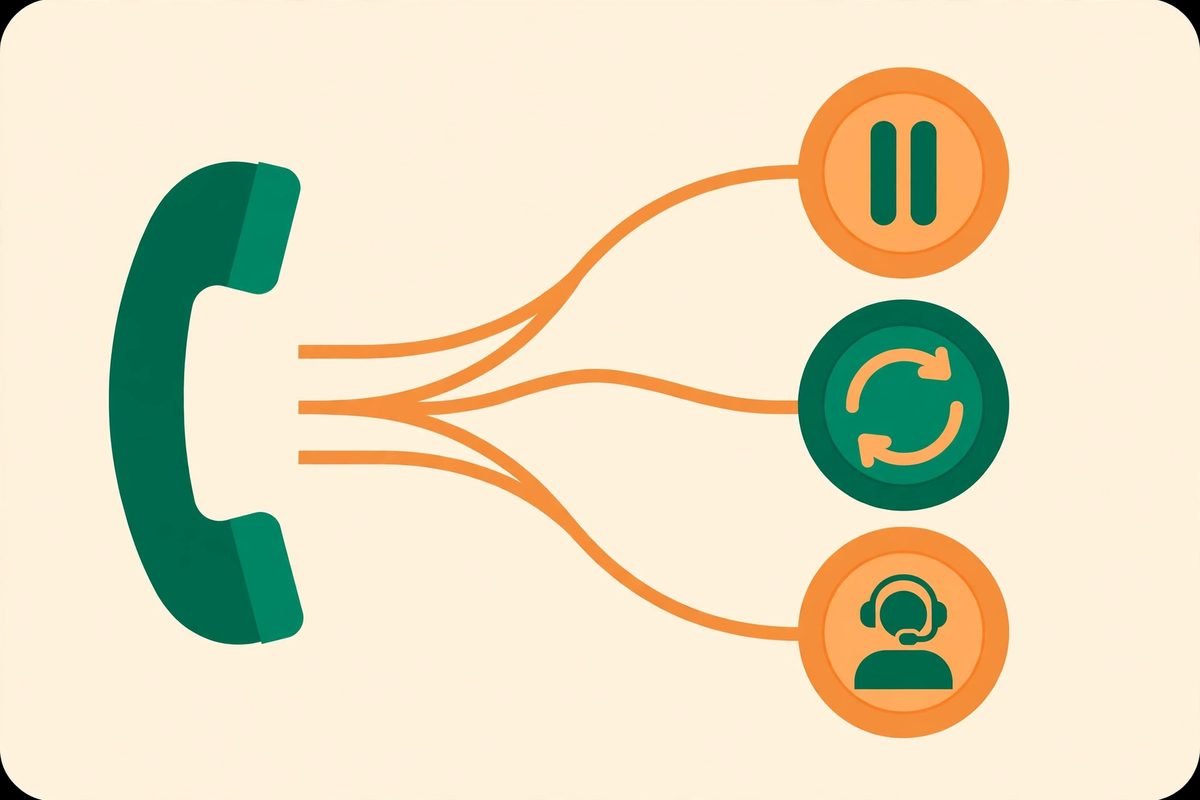
On the Product Hunt launch page, the Vaani team lists what you can configure without code, and it reads like a checklist of the exact things that break in real deployments. You design the call flow, including how the agent handles objections, interruptions and edge cases. You give it actions: hold the call, schedule a callback, hand off to another agent or to a human. You connect a knowledge base so the agent answers from your own documents mid-call, rather than improvising from general knowledge. You pick a number and go live.
Then comes the part most demos skip: after every call, you get structured data — extracted fields and a disposition — so you do not have to read transcripts to know what happened. A sales team does not want a transcript; it wants to know whether the lead qualified and what happens next. If Vaani’s extraction is reliable, it turns voice into a data source. Test that claim on your own calls before committing, because extraction quality is where voice platforms most often over-promise.
Vaani also keeps context across calls, so an agent can pick up where the last conversation left off instead of making the customer repeat themselves. Before switching that on, check what is retained, for how long, and under whose control.
Voice behaviour, latency and the failover story
Vaani makes a point of behaviour, not just words. Its discussion posts describe controls for speaking speed, response timing, emotional expression and voice tags, voice consistency, volume control, optional breathing sounds and ambience, and patience when callers spell out details. The honest caveat, which Vaani itself states, is that these controls depend on the text-to-speech provider: the same configuration will not necessarily produce the same behaviour across different voices. Budget a testing pass per voice, not per platform.
On latency, Vaani claims a p90 of around 450 milliseconds. Treat that as a vendor claim to verify on your own lines: real-call latency depends on carrier, region, model chain and connection. What you can verify cheaply is whether conversations feel natural — no dead air, clean turn-taking, no talking over the caller.
The failover design is the strongest engineering signal in the launch material. Vaani describes independent fallback chains for speech recognition, the language model and text-to-speech, each with its own backup providers, plus error-based switching, a safety-net fallback model for misconfigured agents, and configurable routing with your own API keys. Crucially, failover happens inside the same conversation rather than forcing the caller to start over. The trade-off is real: switching providers mid-call can cost latency and consistency, so fallback chains need testing under failure, not just under success.

Languages, channels and the “sounds local” angle
Vaani’s team says it started with languages where data is scarce, which is why “sounds local” matters so much to it. The launch material describes deployment across phone calls, websites, apps and WhatsApp, with agents that can auto-switch language and dialect. For a business serving customers in more than one language, that is the right problem to solve — a voice agent that only works well in English is a partial product in most of the world.
What is not yet verified is independent accuracy data across languages, and the site’s headline statistics currently render as placeholder-style figures rather than audited numbers. Test language quality with your own callers, in your own dialects, before promising it to customers.
Pricing: what is verified, and what is not
Here is the honest pricing section: at the time of writing, Vaani’s public pages do not publish paid pricing tiers. What is verified is the launch offer — 1,000 free credits with the code PHL1000X when you try the platform at platform.vaani.dev — and that enterprise work is handled through a forward-deployed engineering arrangement. Per-minute rates, monthly plans and credit pricing are not published on the pages we checked, so this review will not invent them.
That gap matters, because a voice platform’s real cost is rarely the headline subscription: it is minutes, model usage, telephony and maintenance time. Until Vaani publishes rates, run the free credits through a realistic pilot and measure minutes per resolved outcome, not minutes per call. And beware lookalike pricing: other similarly named products publish their own rates, and none of those figures belong to Vaani Developer Platform.
How Vaani compares to the alternatives
The voice-agent market splits roughly three ways: do-it-yourself stacks (maximum control, maximum maintenance), fully managed contact-centre platforms (polished, expensive, often rigid), and harnesses in the middle — Vaani and its peers — that give you a configured pipeline with provider choice and fallback, without forcing you to build the plumbing.
Vaani’s differentiators are no-code call-flow design with diff review, structured post-call data, per-layer failover with your own API keys, and the multilingual, sounds-local positioning. Its weaknesses are youth and thin independent evidence: the Product Hunt page carries a 4.0 out of 5 rating from a single rating, and there is no independent review base yet to check the latency and accuracy claims against.
From our experience: who should buy, and who should not
At MTD Technologies, we have spent nine-plus years building web, mobile and AI systems across more than 300 projects, and the pattern with voice is consistent: the demo is the easy ten percent, and the production call flow is the other ninety. Vaani is aimed squarely at that ninety percent. The teams most likely to get value are small and mid-sized businesses needing phone agents for lead qualification, appointment setting, order support or first-contact outreach, without a dedicated voice engineering team.
Who should not buy yet? Teams with strict compliance requirements should wait for published data-retention, security and residency documentation before putting Vaani in front of regulated customers. Teams needing deep CRM or telephony integrations should confirm those integrations exist, not assume them. High-volume contact centres should pilot at real scale, because failover and latency claims only mean something under load. In every case: free-credit pilot, ten to fifty real calls, measure resolution rate and handoff quality, then decide. If you would like help designing that pilot, our AI automation services team can scope it with you, and you can browse other tools in our AI Tools Directory.
Three gotchas for the pilot. Test interruptions hard: callers talk over agents and change their minds mid-sentence, and that is where most voice agents fall apart. Test the handoff: an agent that cannot cleanly pass a frustrated caller to a human, with context attached, costs more goodwill than it saves. And watch the knowledge base: stale docs produce confident wrong answers.
Frequently asked questions
What is Vaani Developer Platform?
Vaani Developer Platform is a no-code voice AI harness from Vaani AI Research, a Bengaluru-based team, for building, deploying and managing voice AI agents across phone calls, websites, apps and WhatsApp.
Do you need to write code to use Vaani?
No. Configure it without code: describe the agent in plain language, answer Teacher AI’s clarifying questions, design the call flow, connect a knowledge base and pick a number to go live. Deeper control is available via your own API keys and provider routing.
How much does Vaani Developer Platform cost?
Paid pricing tiers are not published on Vaani’s public pages at the time of writing. The verified launch offer is 1,000 free credits with code PHL1000X at platform.vaani.dev. Check the platform for current rates, and ignore pricing from similarly named products.
What happens if a model or provider fails mid-call?
Vaani uses independent fallback chains for speech recognition, the language model and text-to-speech, switching to a backup provider mid-conversation when the primary errors. Teams configure primary and backup models and bring their own API keys, though switching can trade latency and consistency for reliability.
Is Vaani Developer Platform the same as the Vaani dubbing tool?
No. Vaani Developer Platform (vaani.dev) is a voice-agent harness for live phone and messaging conversations; the similarly named Vaani dubbing product translates and dubs video. Same name pattern, different product.
The verdict is straightforward. Vaani voice AI harness developers have built something genuinely useful: a no-code harness that treats interruptions, edge cases, failover, handoffs and structured outcomes as first-class features. It is young, paid pricing is unpublished, and its boldest claims need verification, so treat it as pilot-first, not a blind commitment. Run the free credits through real calls, measure what resolves, and decide on evidence. To talk through a pilot, contact MTD Technologies about the calls you want automated.